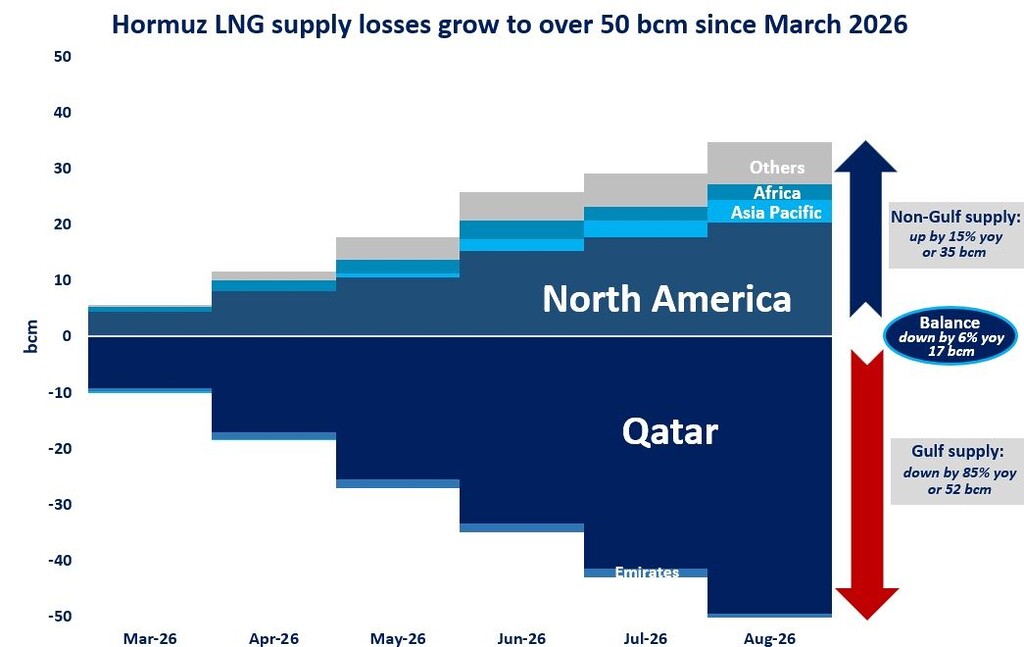
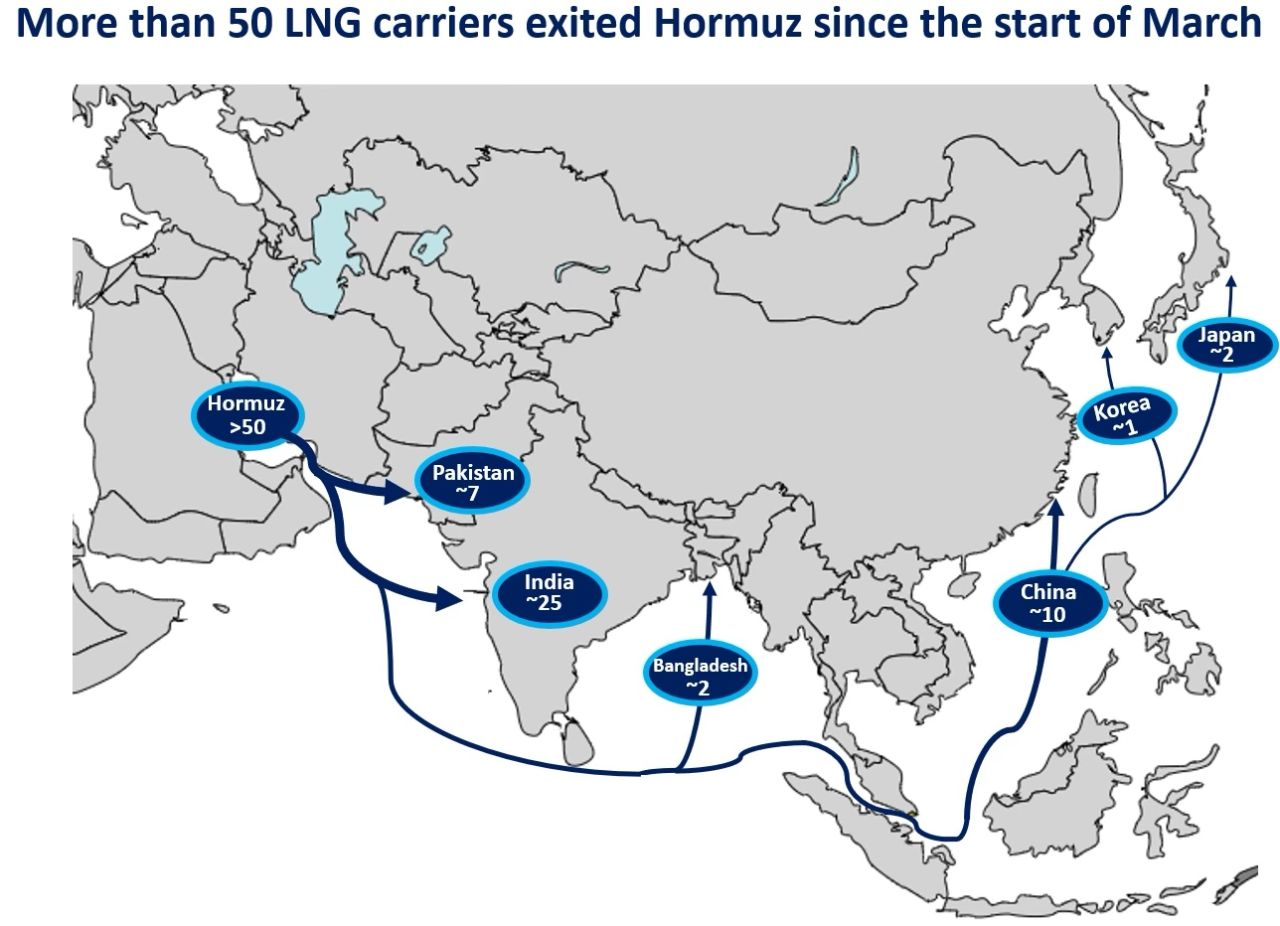
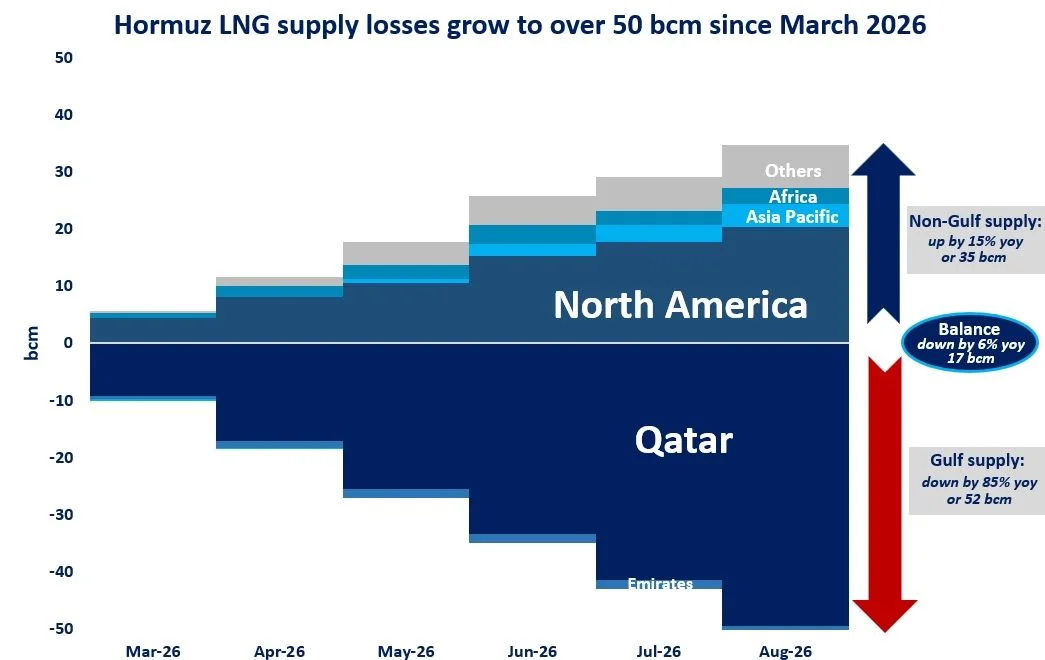
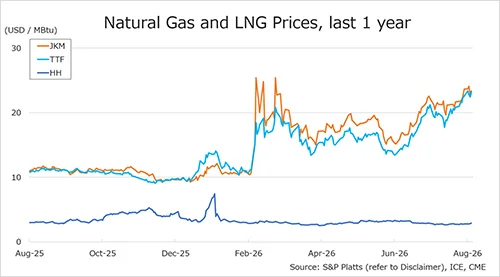
Hormuz LNG supply losses have exceeded 50 bcm since March 2026 as Qatar and the Emirates have remained effectively cut off from global LNG trade. However, rapidly rising production elsewhere—particularly in North America—has offset around two-thirds of the missing Gulf supply.
The 50 billion loss: Qatar and the Emirates have been effectively cut off from global LNG trade for over six months now, leading to a cumulative LNG supply loss of more than 50 bcm through the March–August period—a decline equating to around half of China’s LNG imports in 2025.
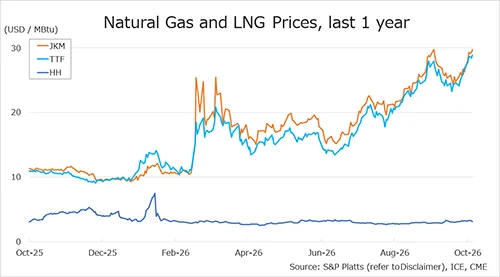
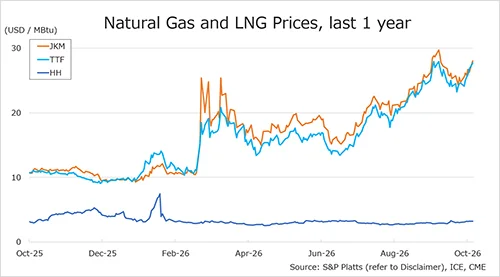
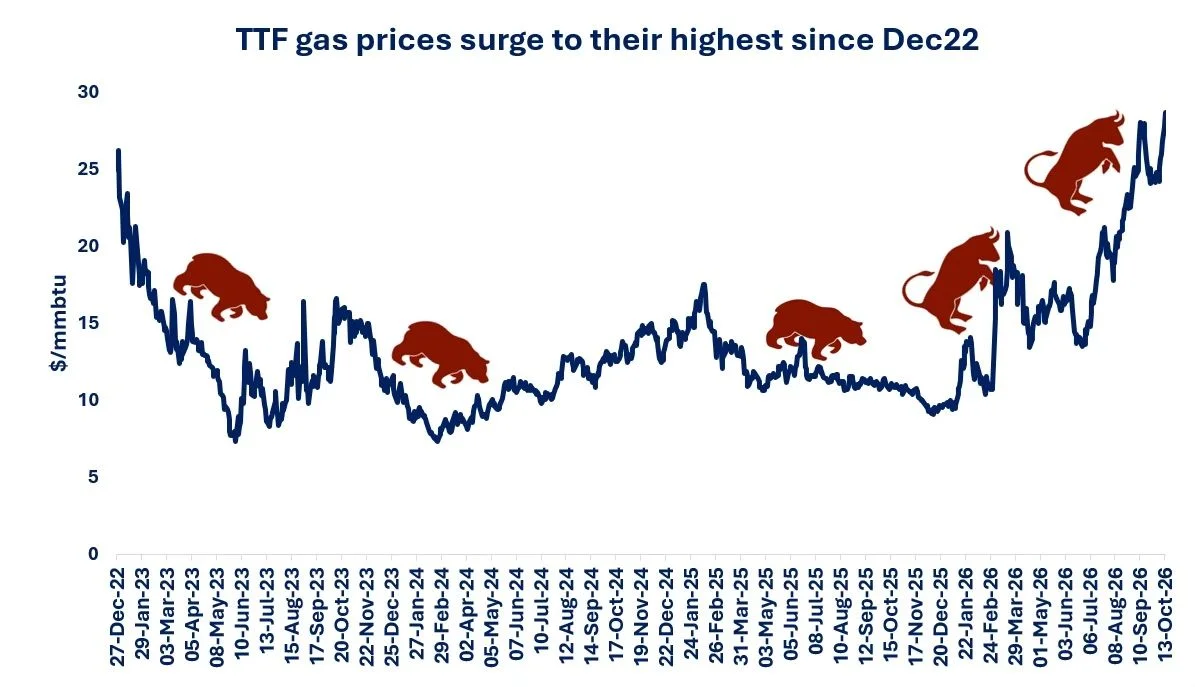
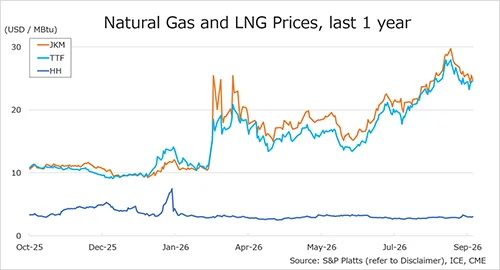
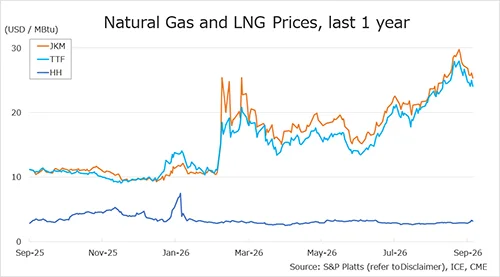
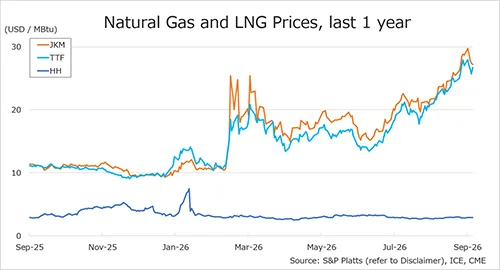
This unprecedented LNG supply shock drove gas prices to their highest levels since December 2022, weighed on gas storage filling in the EU and is already leading to demand destruction in some gas- and energy-intensive industries in Asian markets.
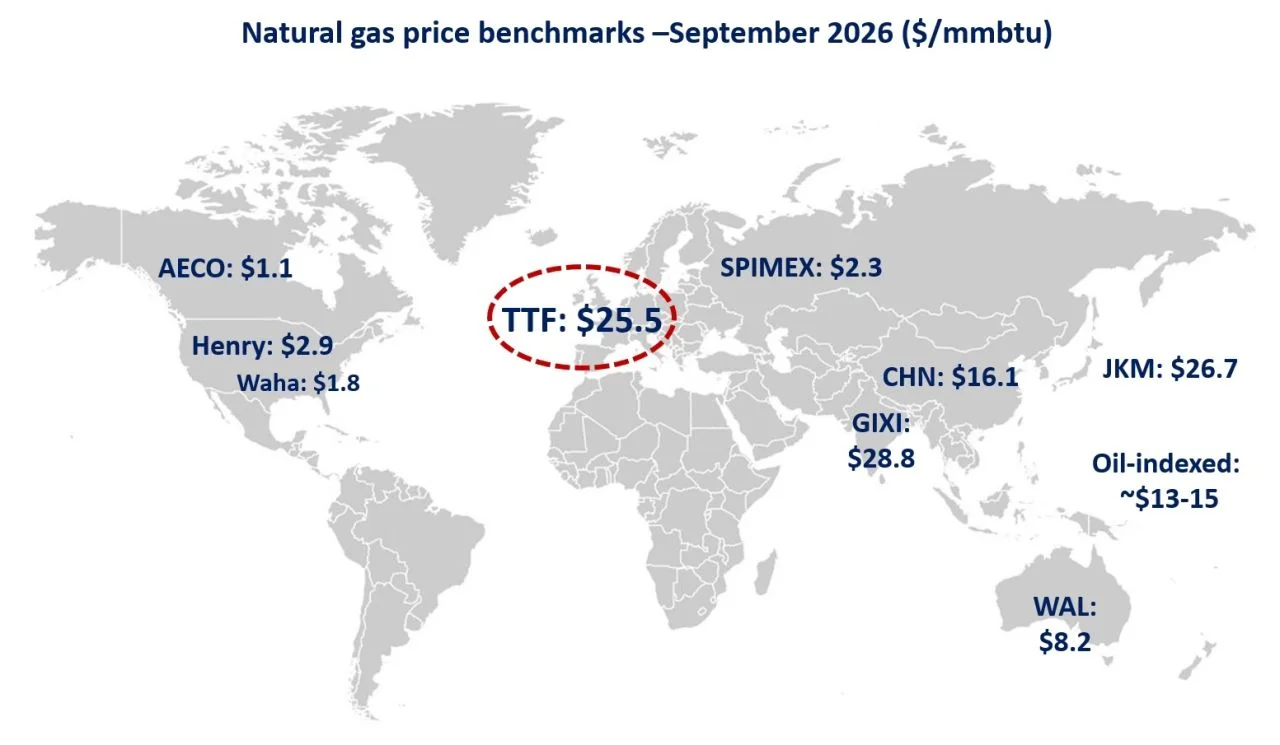
While TTF prices nearing $25/MMBtu are painful, the Hormuz LNG crisis could have been much worse.
In fact, around two-thirds of the lost LNG supply has been offset by very strong growth in other LNG-producing regions: non-Gulf LNG production surged by a staggering 15%, or 35 bcm, compared with last year.
Altogether, global LNG supply has fallen by around 6%, or just over 15 bcm, since the beginning of March—a more manageable decline than the 50 bcm shortfall.
The rapid scale-up of new LNG supply has been led by North America, which increased its LNG exports by more than 25% year on year, with the ramp-up of major projects such as Plaquemines LNG, Corpus Christi Stage 3, LNG Canada and the recent start of Golden Pass Train 1.
Beyond North America, new projects and improving feedgas availability in Africa and Asia Pacific are also helping to moderate the effects of the Hormuz LNG shortfall.
Without these projects and the underlying investment decisions, the world would be facing a much more difficult and painful gas crisis today.
A key question ahead of the heating season is how global LNG supply will evolve. Hormuz remains the single most important uncertainty, while the ramp-up of new LNG projects might slow in the coming months, thereby offsetting less of the potential supply losses from Qatar and the Emirates.
What is your view? How will the global gas market evolve in the coming months? Could we see a further tightening of supply fundamentals?
Source: Greg Molnár (Linkedin)