
Australian LNG is being resold in significant volumes by Japanese companies, raising questions over energy security claims and the balance between commercial interests and supply priorities.
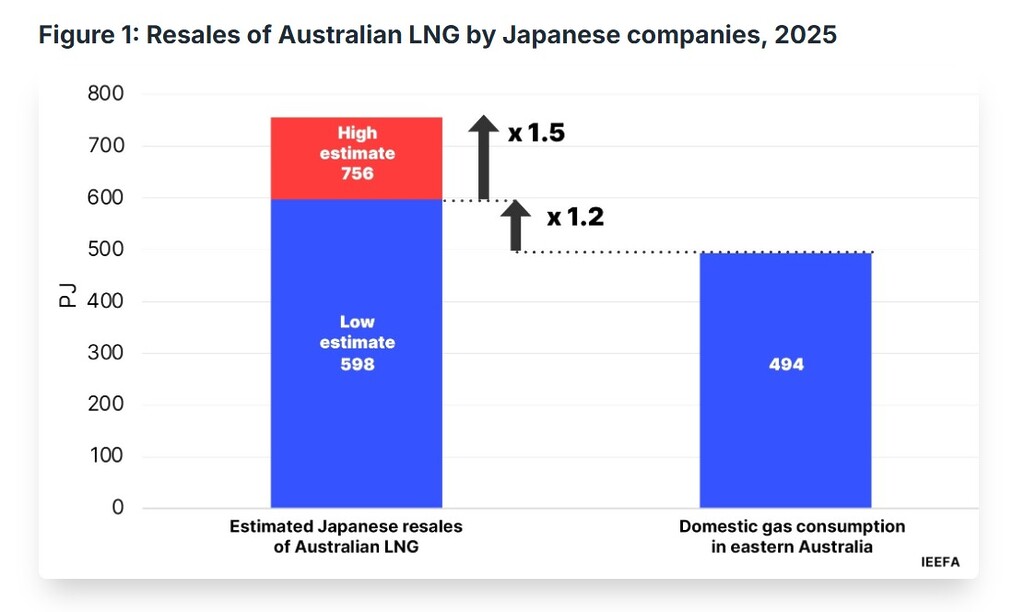
Japanese companies are reselling substantial volumes of Australian LNG to other Asian markets, raising concerns about claims that these exports are primarily needed for Japan’s energy security. In 2025, Japanese firms resold an estimated 10.8–13.6 million tonnes of Australian LNG, equivalent to up to 1.5 times eastern Australia’s annual domestic gas consumption.
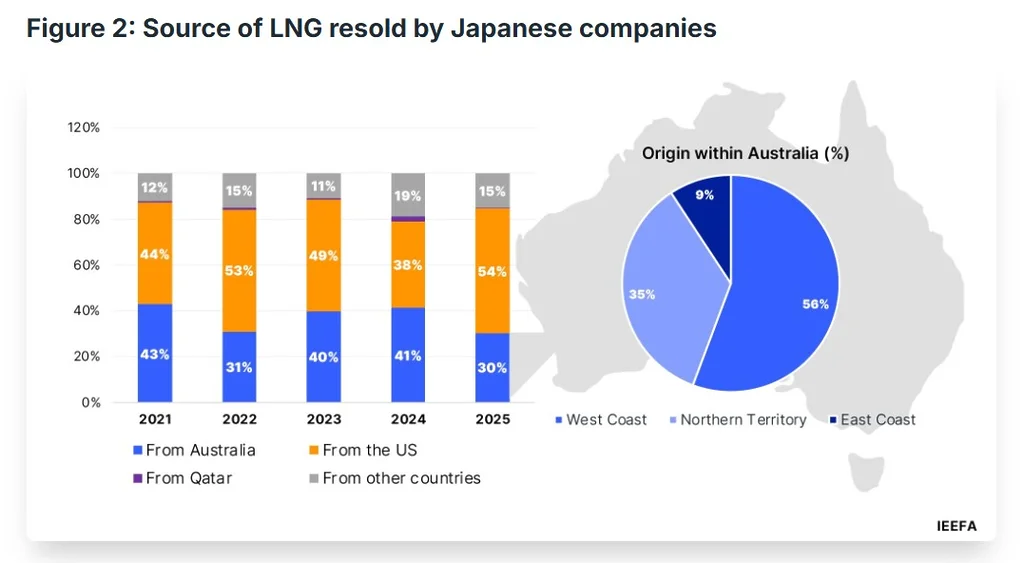
Australia accounted for roughly 30% of all LNG resold by Japanese companies, making it the second-largest source after the United States. Much of the LNG was redirected to countries such as Taiwan and South Korea, where higher market prices created profitable trading opportunities.
The large-scale reselling highlights a contradiction between Australia’s domestic gas supply concerns and continued LNG exports. While Australian policymakers warn about potential gas shortages and rising energy costs at home, significant export volumes are being traded internationally rather than used directly in Japan.
The situation also weakens claims that stronger Australian domestic gas reservation policies would threaten Japan’s energy security. The ability to resell large amounts of LNG suggests Japanese buyers have greater supply flexibility than previously presented.
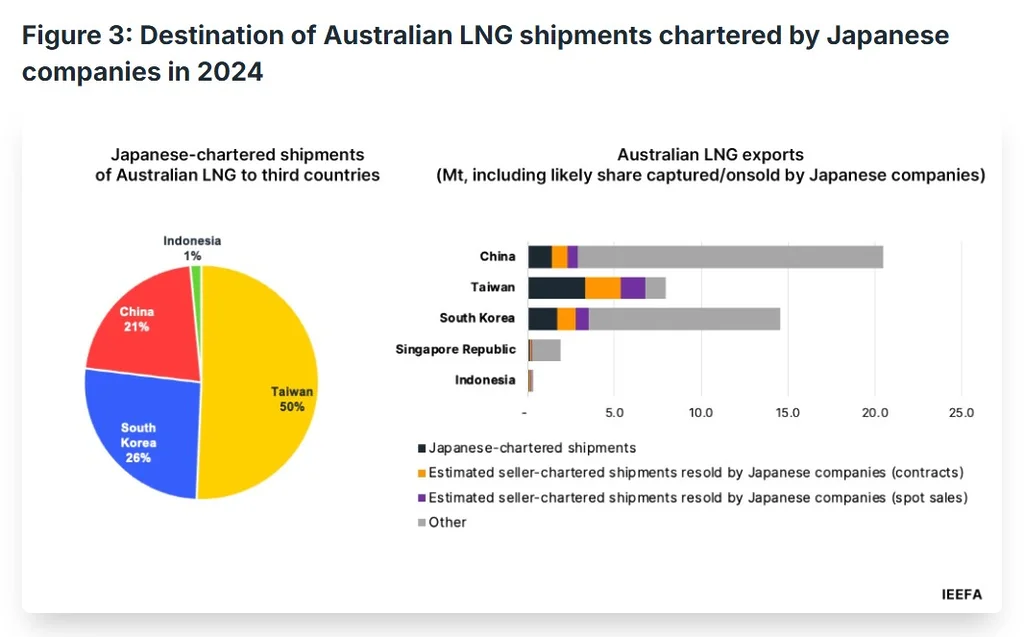
The issue has intensified debate around Australia’s LNG export policies, foreign lobbying efforts, and whether more gas should be reserved for domestic consumers instead of being exported and resold for commercial gain.
Source: IEEFA