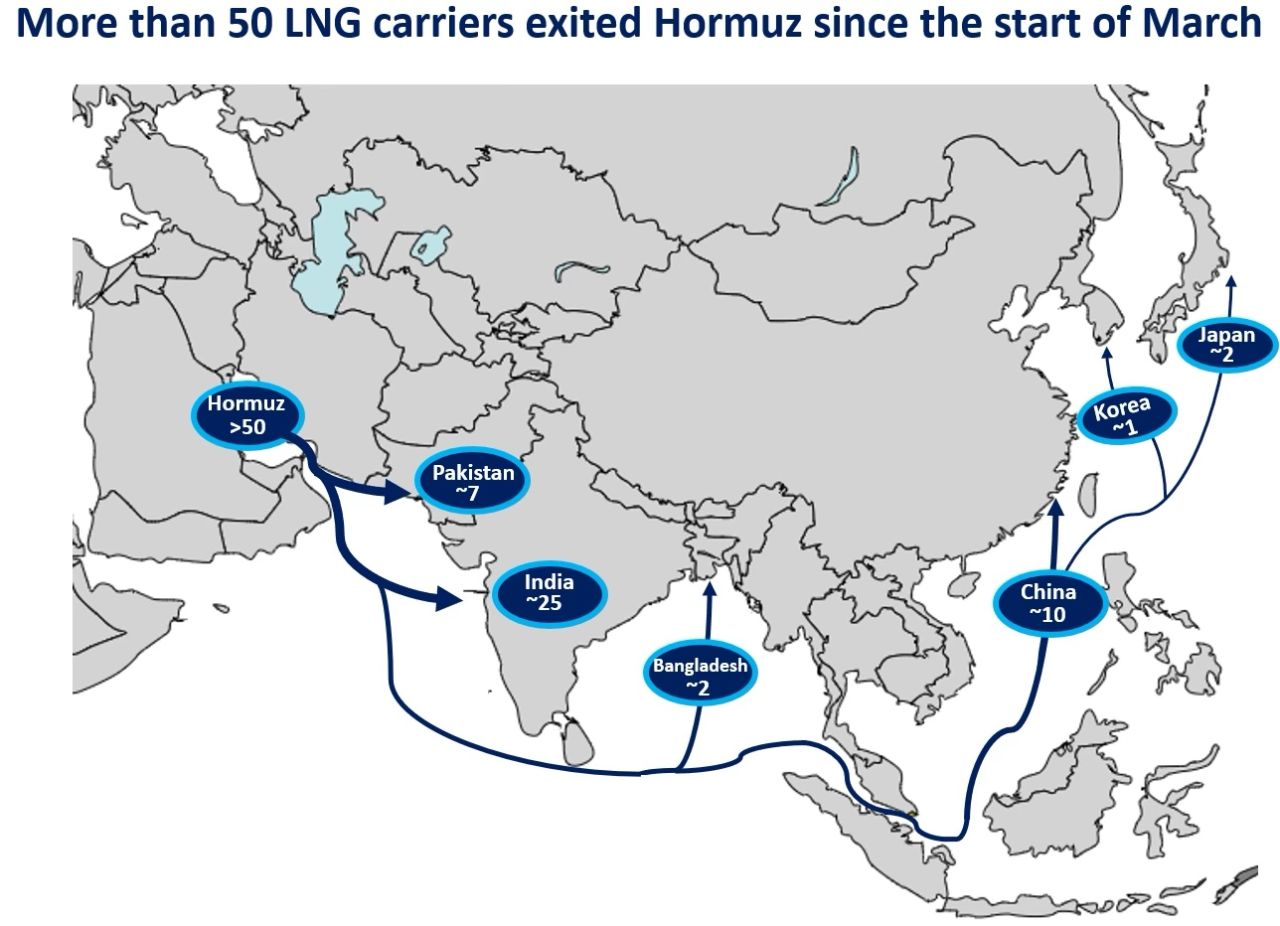
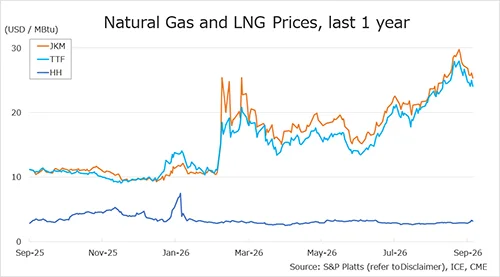
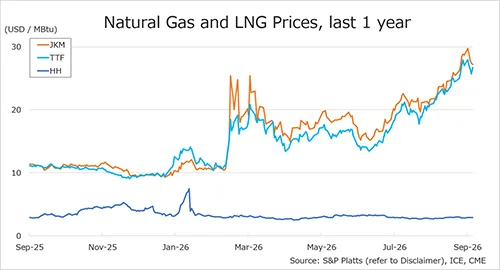
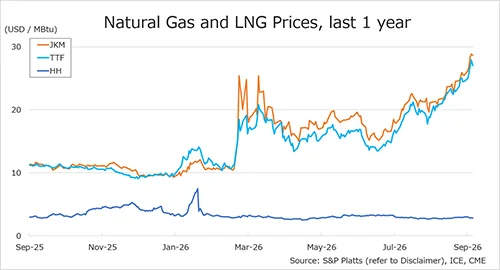
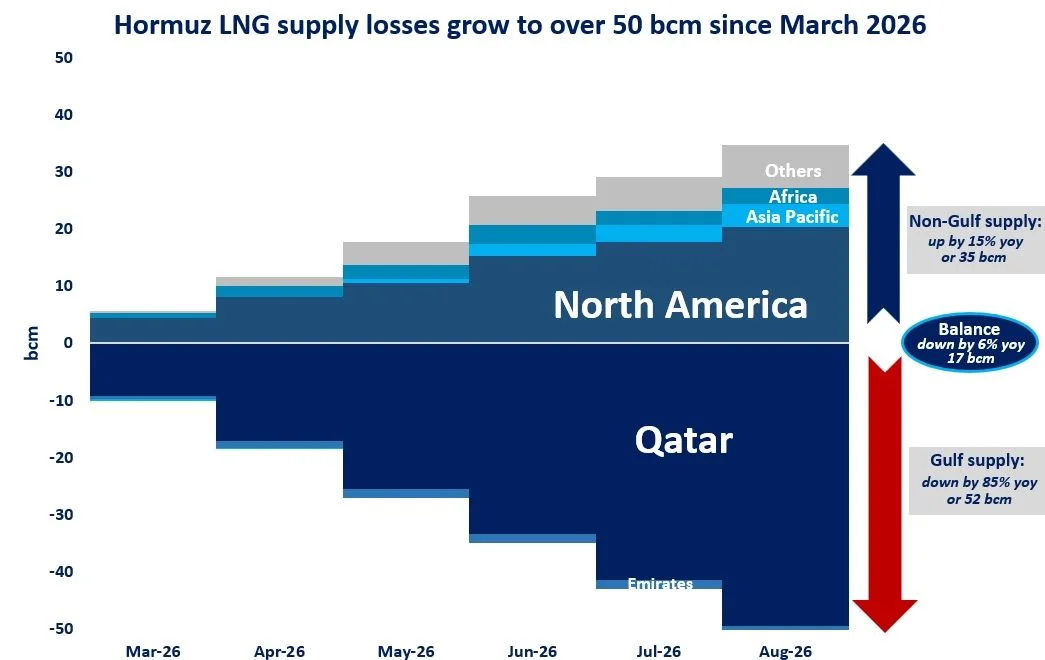
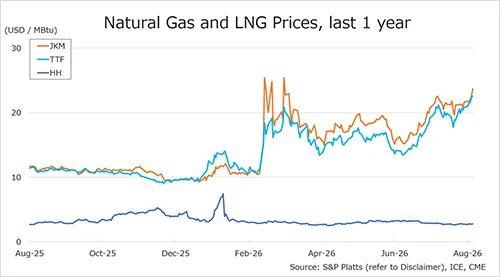
Global gas prices surged in March to their highest level since the 2022/23 gas crisis, with almost 20% of global LNG supply disrupted at the Strait of Hormuz.
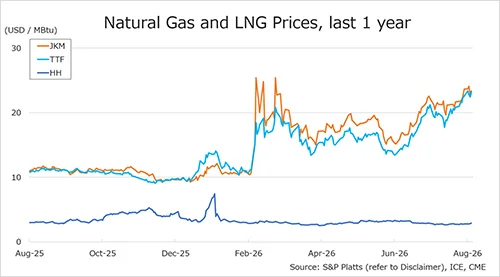
Asian and European gas prices surged in March to their highest level since the 2022/23 gas crisis, with almost 20% of global LNG supply disrupted at the Strait of Hormuz.
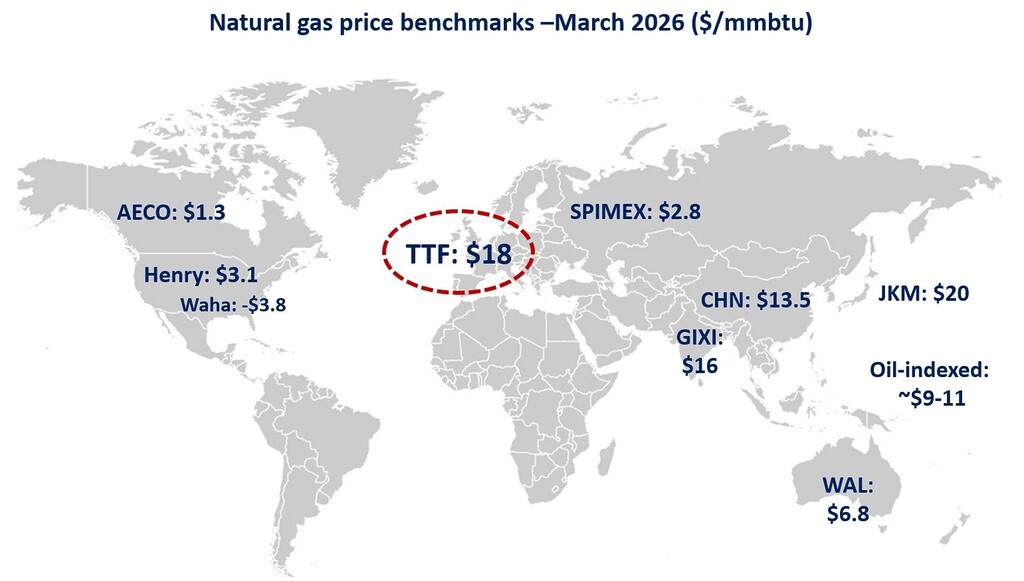
In Asia, JKM prices more than doubled in the first two trading days after the Hormuz closure and averaged at $20/mmbtu through March – their highest level since Jan23.
Asian markets are the most directly exposed to the current supply disruption, with Hormuz accounting for more than 25% of the region’s LNG supply.
Not surprisingly, price volatility went over the roof, hitting a staggering 300% on JKM – its third highest monthly average on record. The spread between JKM and TTF averaged at $2/mmbtu through March – more than enough to divert flexible LNG cargoes away from Europe to Asia.
Meanwhile in Europe, TTF month-ahead prices soared by 60% compared to February to an average of close to $18/mmbtu – their highest monthly level since Jan23. While Europe has a lower direct exposure to Hormuz, we are all living in a globalised gas market.
Europe’s LNG imports started to decline steeply in the second half of March, as LNG availability is reduced and competition with Asian markets is heating up. High gas prices are already driving gas-to-coal switching in the power sector, although it will take time until it fully kicks in…
In contrast, in the US, Henry Hub prices fell by around 25% yoy to an average of $3.1/mmbtu, as milder weather, strong domestic production and healthy stock levels are putting downward pressure on gas prices.
And further down in the Permian, gas prices at the Waha hub were trading in deep negative territory, at an average of minus $3.8/mmbtu through March – their lowest monthly level on record.
Strong associated gas production together with pipeline constraints is the perfect mix for negative gas prices… highlighting the need for further debottlenecking and bringing those molecules to a market where they are properly valued.
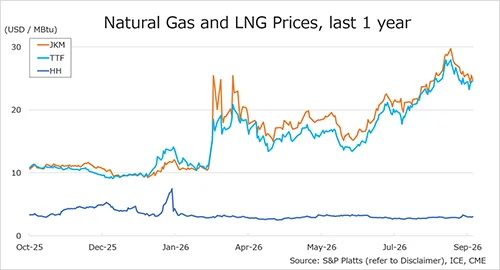
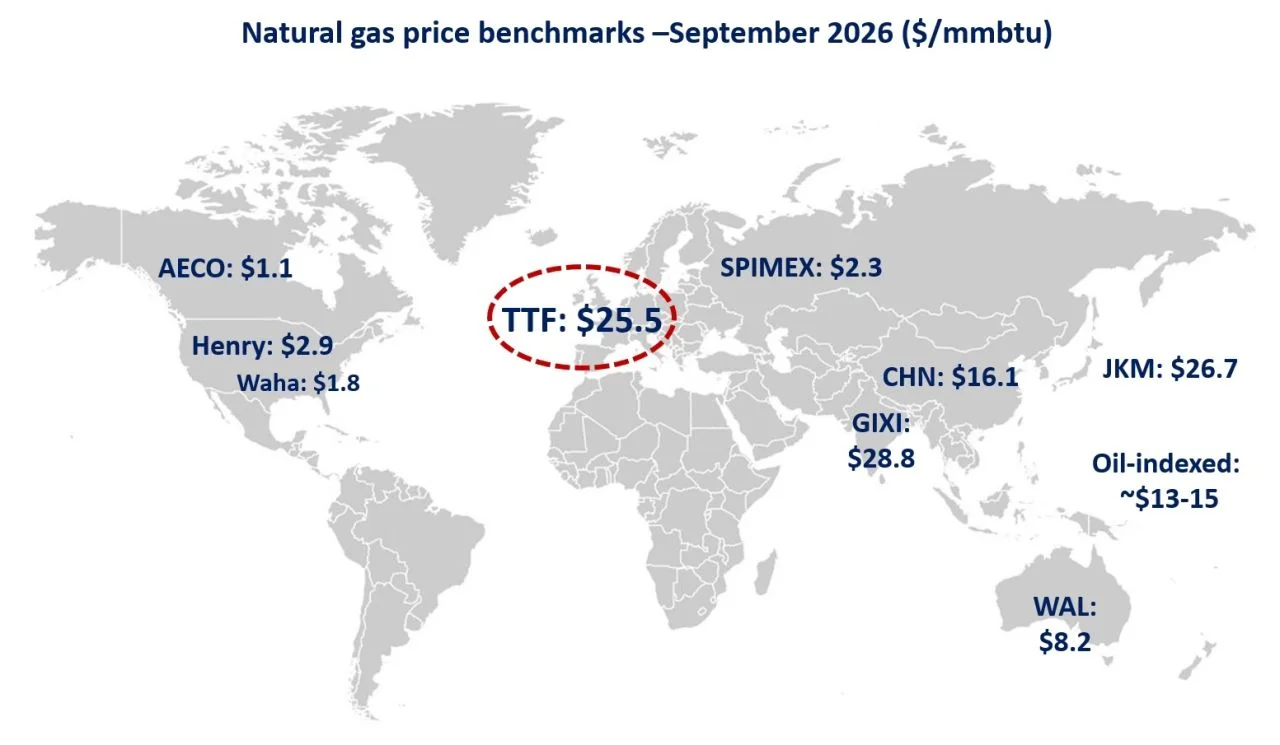
What is your view? How will gas prices evolve through the filling season? The gas summer is starting today!
Source: Greg MOLNAR (LinkedIn)