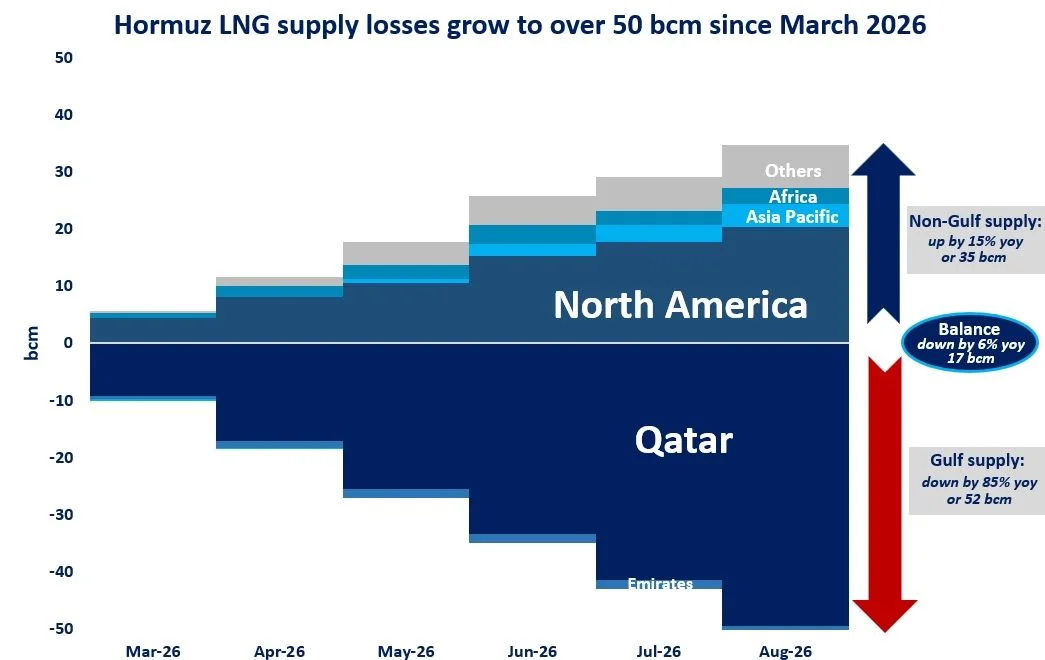
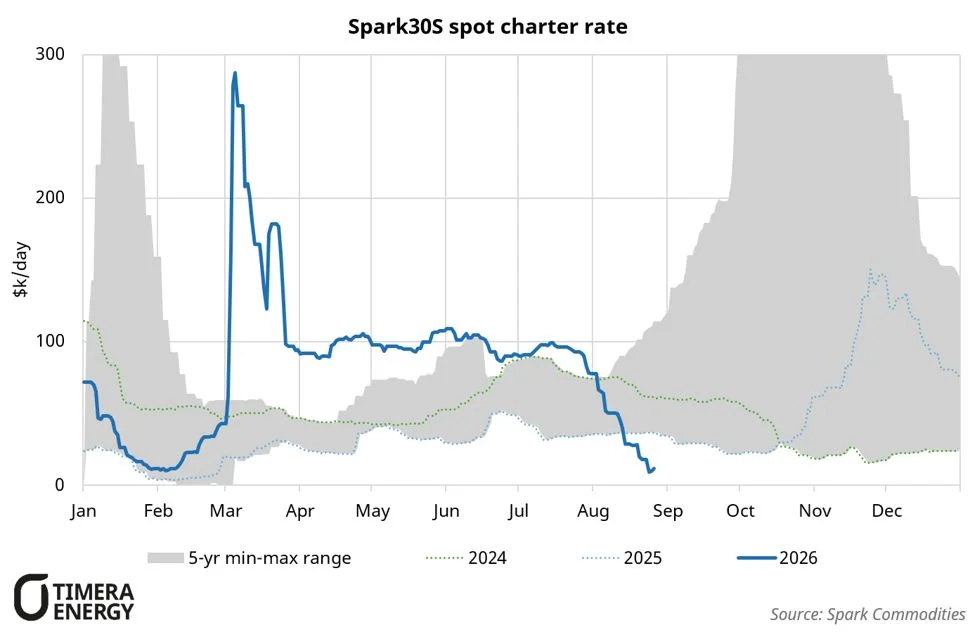
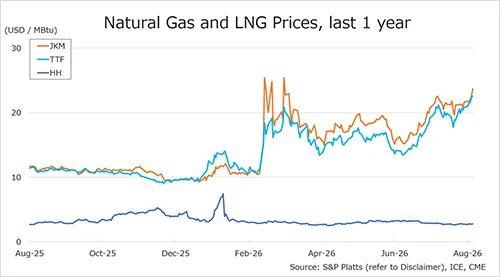
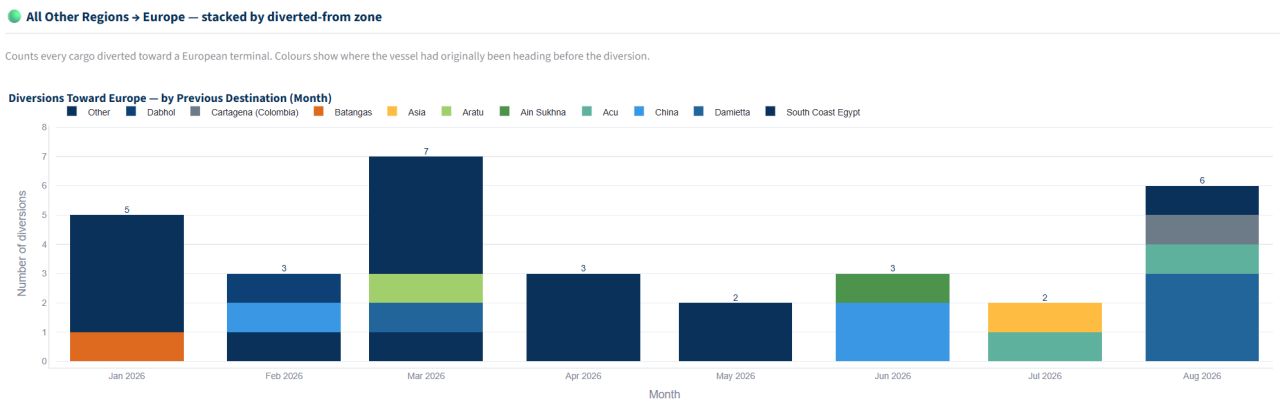
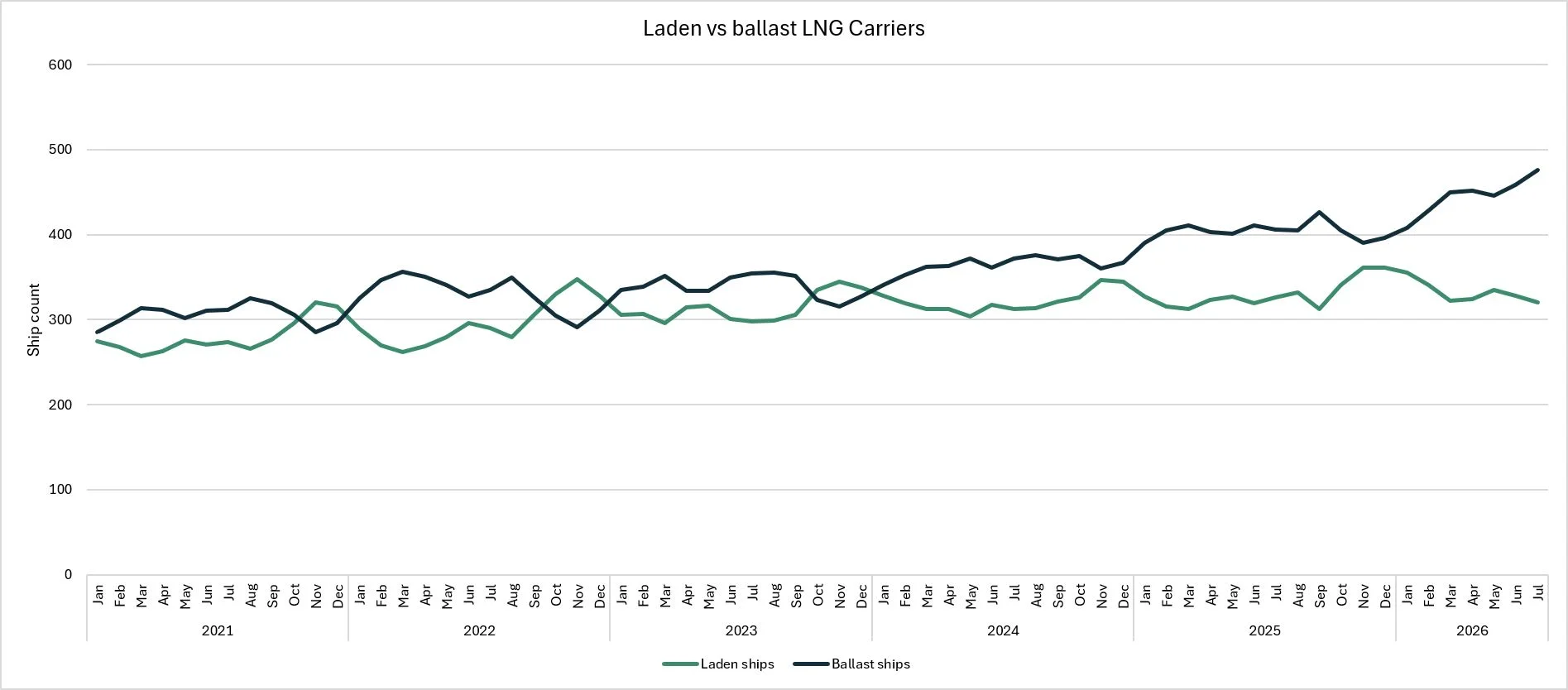
The global gas market is rapidly rebalancing following the Hormuz crisis as stronger LNG supply growth, higher pipeline imports and weaker gas demand in some regions help offset the loss of almost 20% of global LNG supply.
The Hormuz crisis and the consequent loss of almost 20% of LNG supply profoundly disrupted the global gas market. Despite these heavy losses, the market is balancing out, with both supply and demand factors at play.
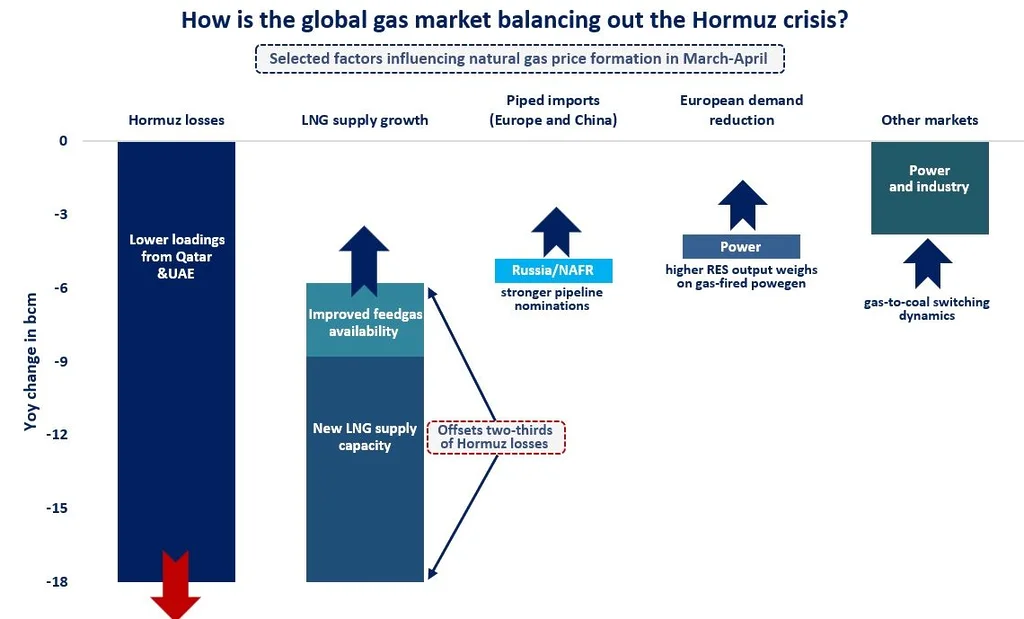
LNG supply from Qatar and the UAE plummeted by 18 bcm compared to last year through March and April. To put this into perspective, this equates to roughly one-third of the EU’s total gas demand over the same period.
So how is the market balancing out this major supply shock?
On the supply side, strong LNG growth in other markets provides some relief, and actually offsets around two-thirds of the losses from Hormuz. Non-Qatari LNG supply grew by a staggering 12 bcm yoy in March-April. This is largely supported by the ramp-up of new LNG projects in the United States, Canada and Africa. In addition, improving feedgas availability at certain legacy producers, such as Angola and Nigeria, is also contributing to stronger LNG output at a time when each and every molecule is needed.
In the US, the Department of Energy authorised Plaquemines LNG to increase its exports by 13%, which would add 4.5 bcm of incremental LNG supply to the market this year.
Gas pipelines are also flexing up, with preliminary data suggesting that both China and Europe nominated upward their pipeline imports from Russia and North Africa, although the overall increase is rather limited when compared to new LNG supply growth.
On the demand side, in Europe, stronger renewables power output depressed gas burn in the power sector and hence alleviated some pressure on the market.
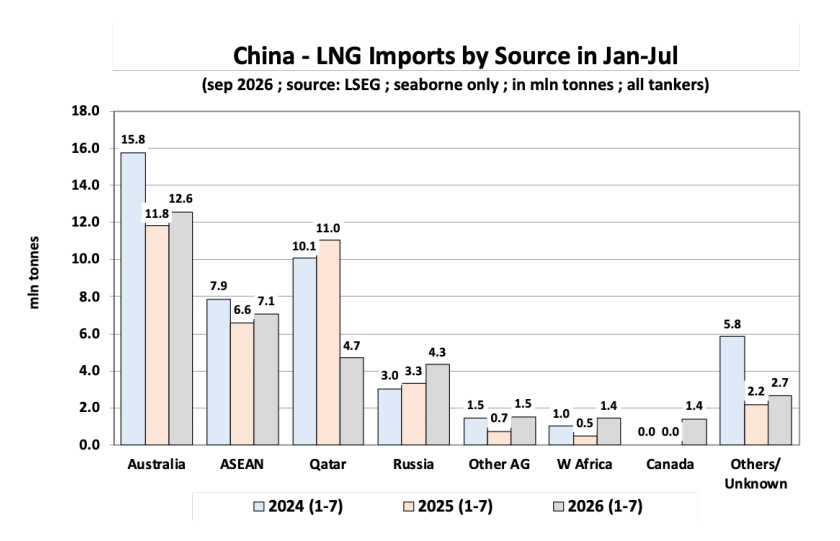
In Asia, key LNG importers introduced measures to support stronger coal burn in the power sector at the expense of natural gas, while in certain markets gas supplies are being curtailed to gas-intensive industries. China is playing a key balancing role in this picture, with the country’s LNG imports down by 25% yoy, supported by gas-to-coal switching dynamics.
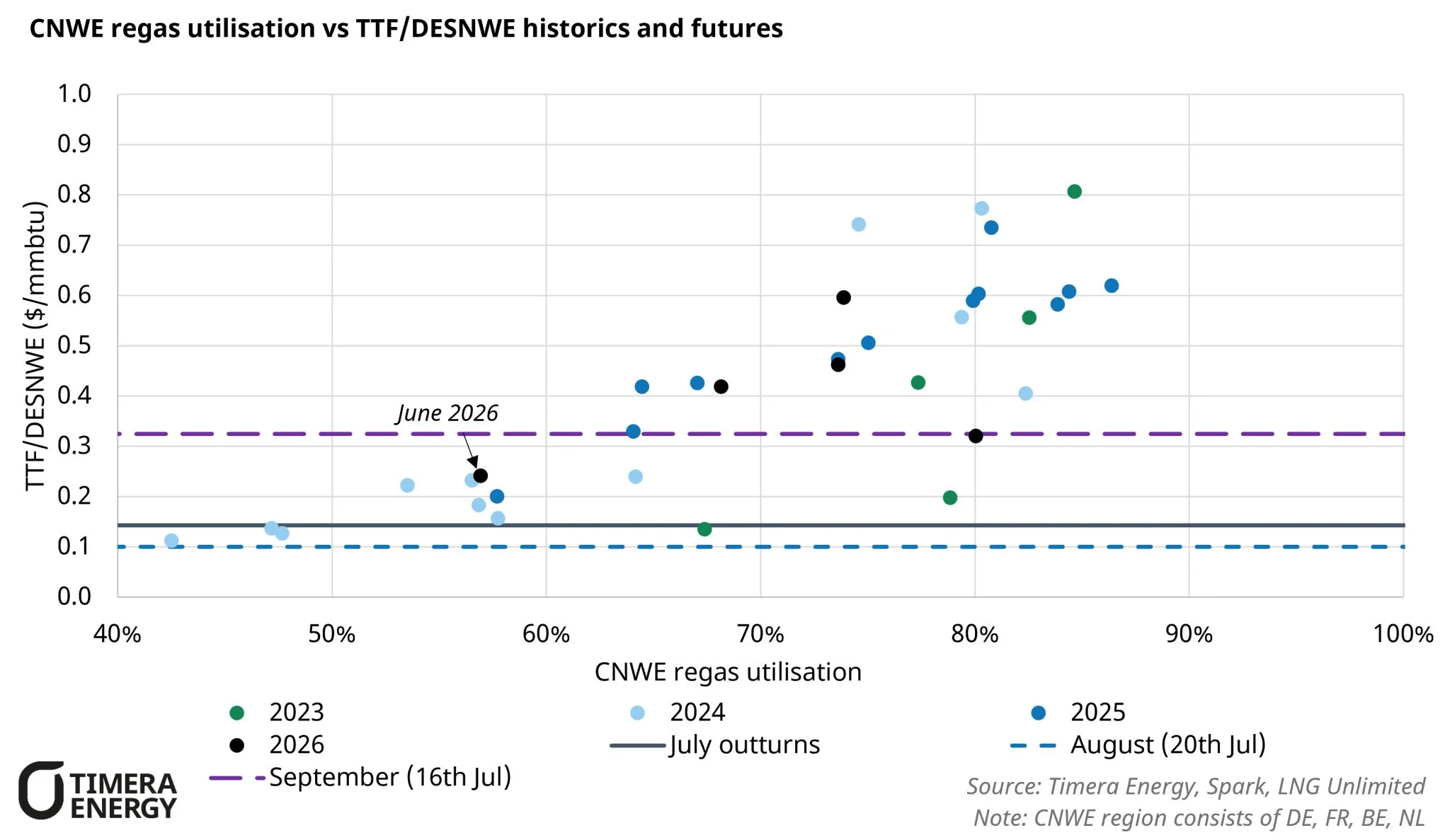
The flexibility of the global gas system will be tested this summer. In the EU, storage injections will need to increase from their current levels if the EU aims to reach its 80-90% fill target. In Asia, a hotter summer and stronger cooling needs could prompt a more aggressive LNG procurement strategy and hence drive up competition with Europe.
Source: Greg Molnár