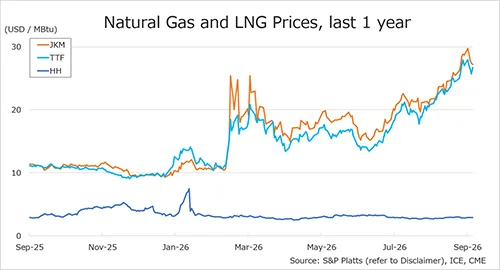
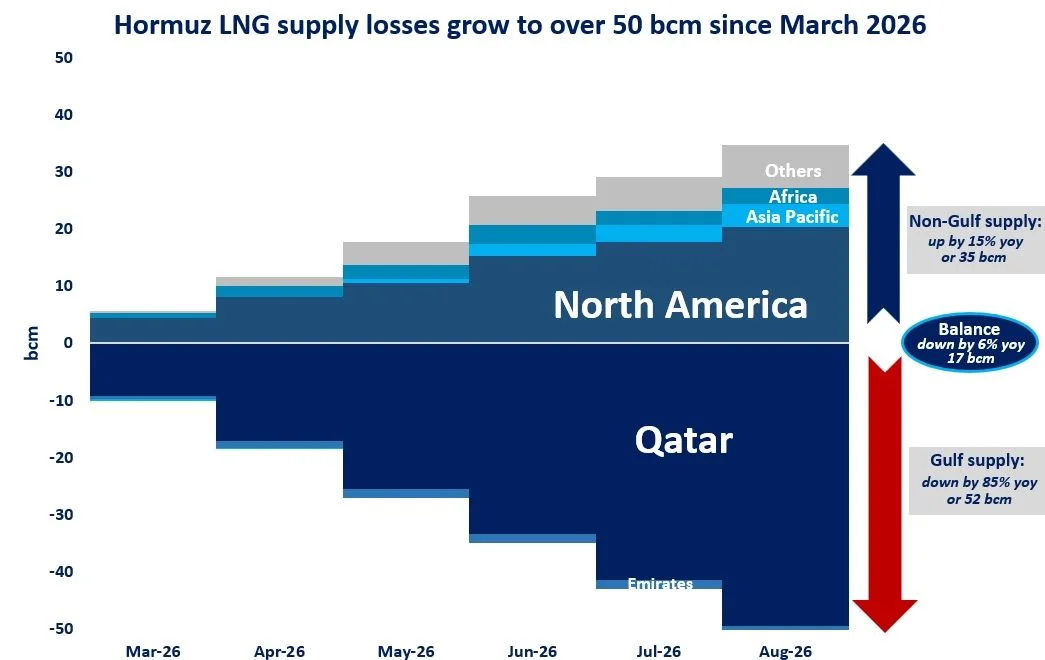
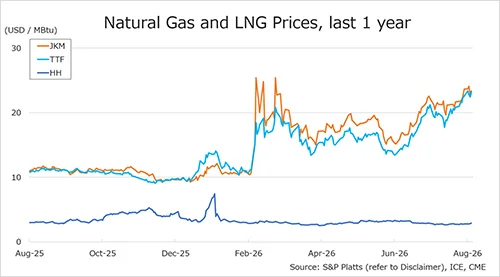
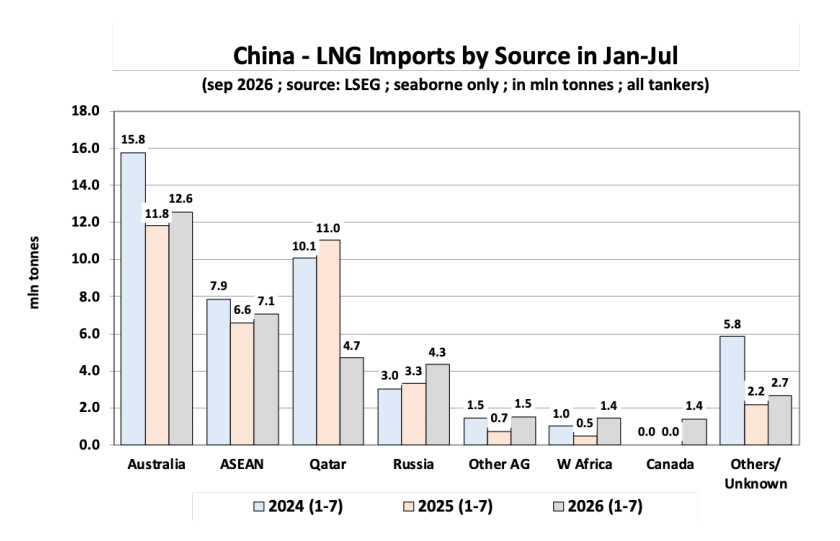
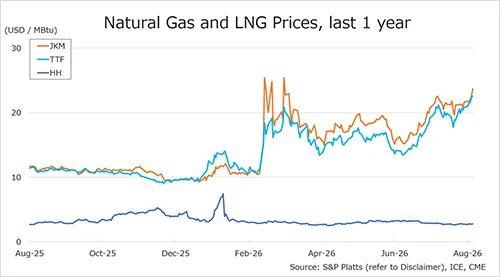
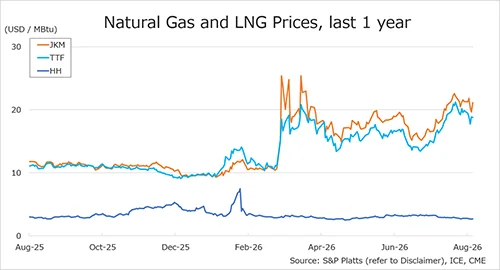
LNG shipping rates are falling despite an extraordinary geopolitical backdrop, with disruption through the Strait of Hormuz, constrained Qatari exports, elevated Asian LNG prices and relatively low European gas storage.
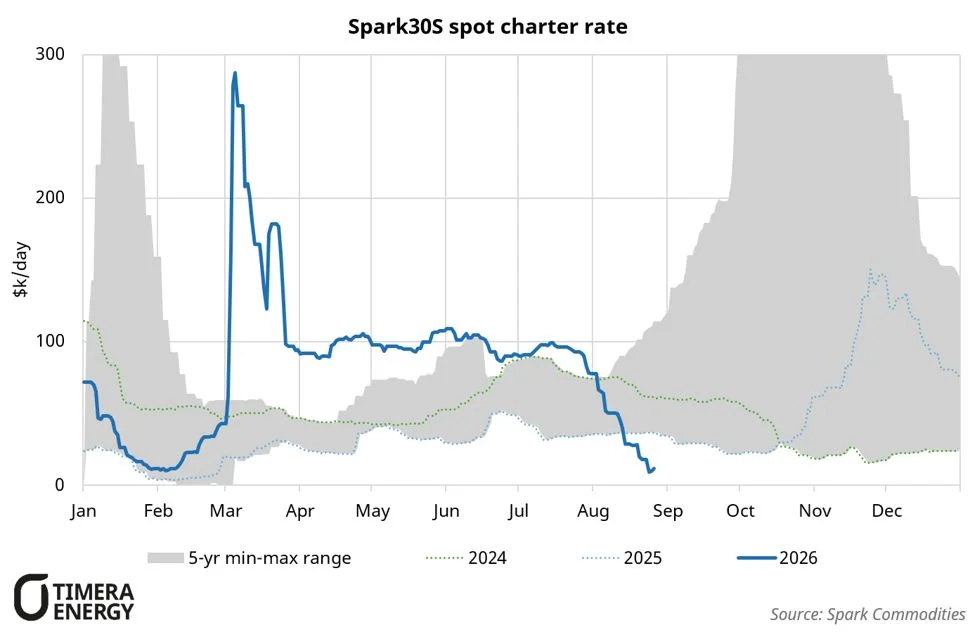
Atlantic spot rates have recently fallen below $50,000/day, highlighting a growing disconnect between geopolitical risk and actual demand for LNG carriers.
Yet LNG freight rates are moving in the opposite direction. Atlantic spot rates have fallen sharply, recently falling below $50,000/day, while Pacific rates are trading closer to $70,000/day. So, what is driving the disconnect?
Geopolitical risk is not the same as vessel demand. The disruption to Middle Eastern LNG has created a major supply shock and pushed LNG prices higher, but while higher prices often correlate with higher freight rates this is not always so, and besides higher prices do not automatically create more spot cargoes competing for ships.
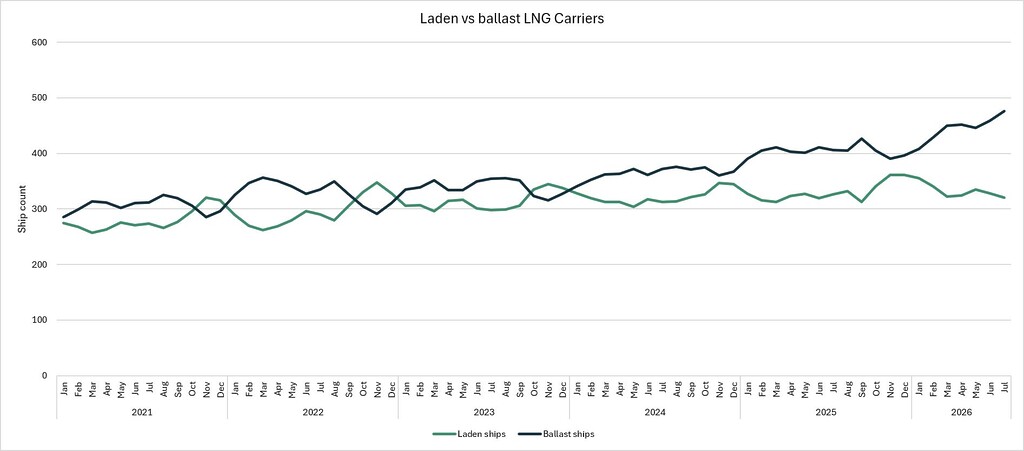
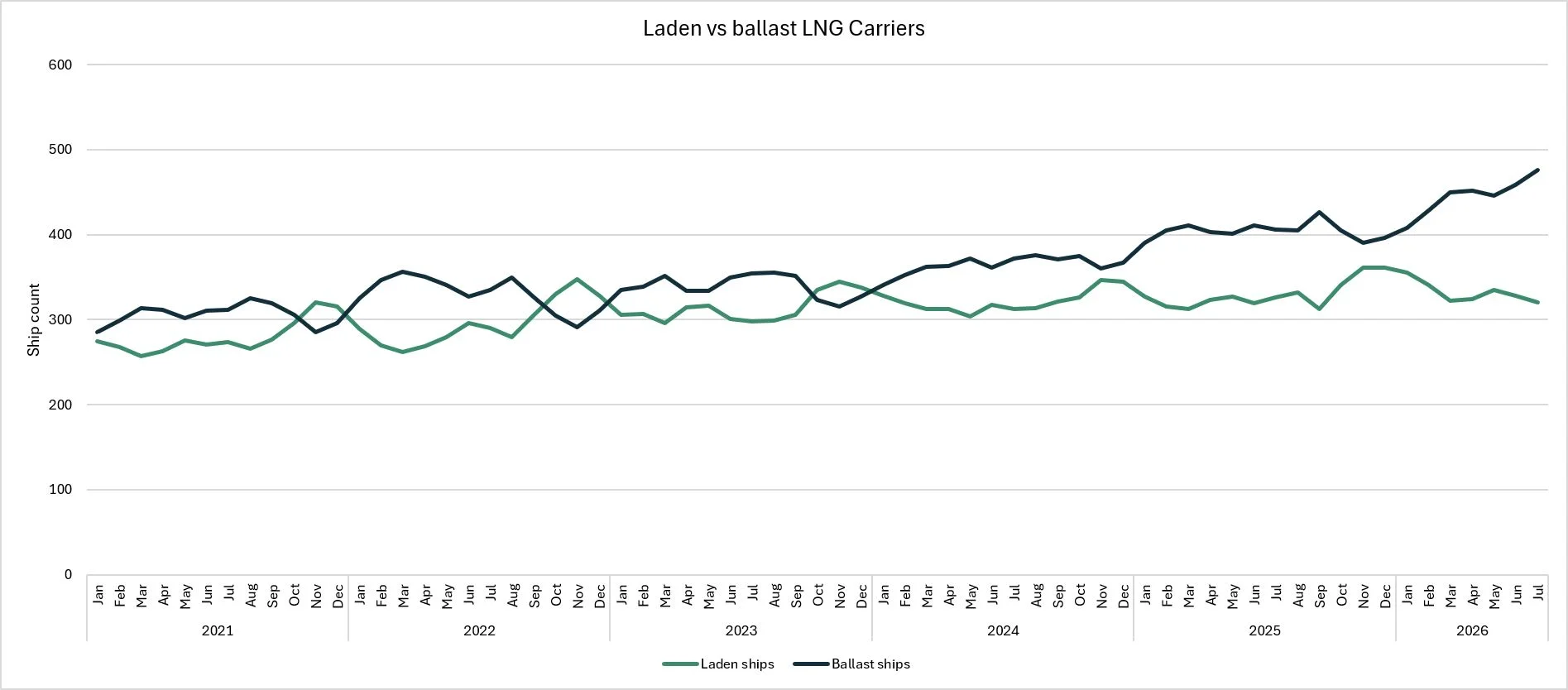
Our latest data show that since the beginning of 2024, there has not been a single month where more LNG carriers were laden than in ballast. More recently, the gap has widened: the number of laden vessels has remained relatively stable, while the number of vessels in ballast, and therefore the pool of potentially available ships has continued to increase.
The Atlantic market is particularly telling. US LNG liftings peaked at almost 12 MT in March and were around 10.7 MT in July, roughly 10% lower. At the same time, the LNGC fleet has grown by around 4%.
Longer voyages are providing some support. Our data show US LNG tonne-miles have increased by around 55% since March, as more cargoes have travelled further. While longer voyages alone can tighten the market, the reduction in global volumes, and a rapidly delivering orderbook is countering that effect.
This is why the Atlantic/Pacific divergence is so interesting. Despite the disruption to Middle Eastern supply and strong Asian LNG prices, Atlantic vessels are facing increasing availability.
And that is ultimately what is now showing up in freight. Geopolitics can tighten the LNG market without tightening the LNG shipping market.
For freight, what ultimately matters is the balance between cargoes, voyage distance and available ships. Right now, the voyage distances are helping, but cargo growth isn’t keeping pace with fleet growth.
Source: Fearnley LNG