Brazil LNG infrastructure is entering a new growth phase as the country expands its import terminals and strengthens coastal pipeline connections.
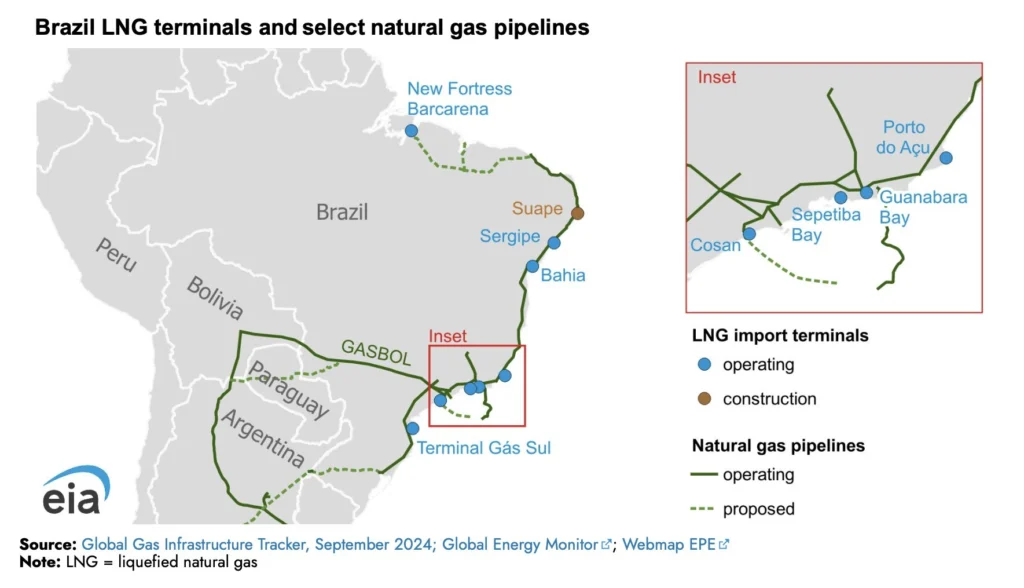
According to the latest analysis from the U.S. Energy Information Administration (EIA), the country is adding new LNG terminals and integrating them with its coastal pipeline network to strengthen supply security and support power generation needs.
Brazil currently operates several floating LNG import units along its coast, with additional terminals under construction or planned. Recent developments include new facilities in Barcarena and Suape, as well as further integration of LNG imports into the GÁS-BOL pipeline system, which links Brazil to Bolivia and southern demand centres.
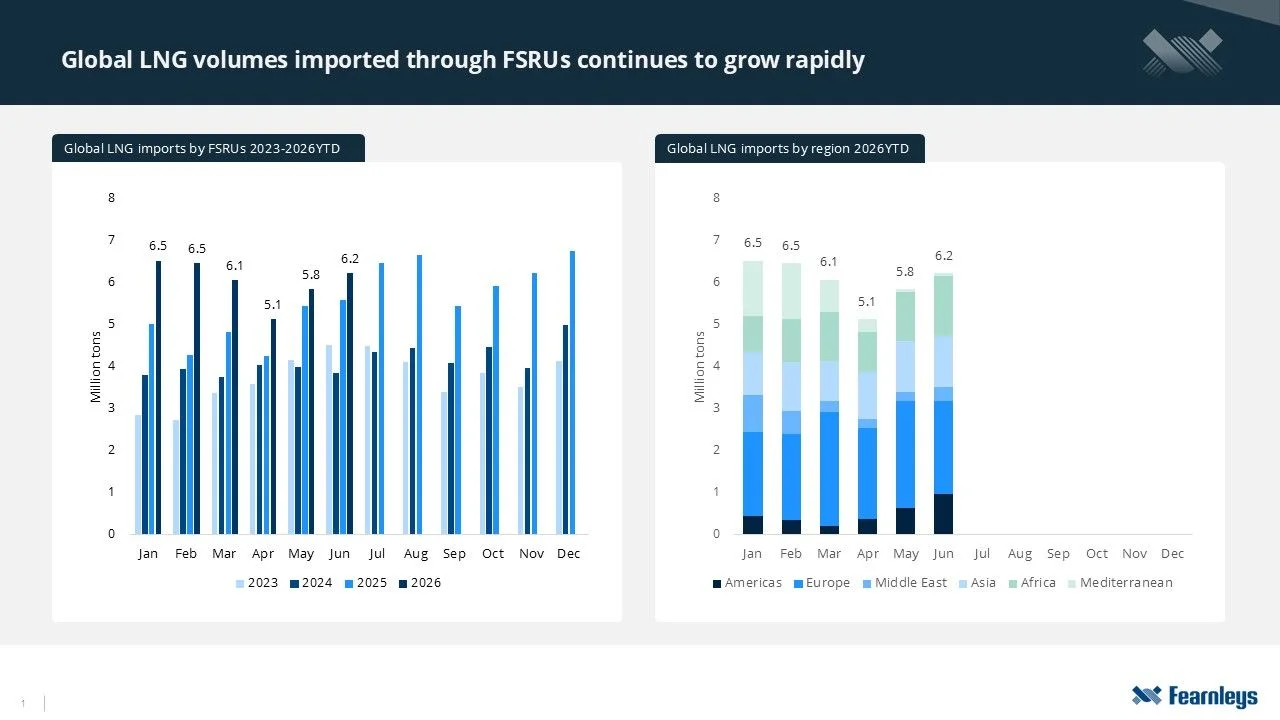
The EIA notes that LNG continues to play an important balancing role in Brazil’s energy mix, especially during periods of low hydropower output. As new terminals come online, Brazil is expected to rely more heavily on flexible LNG volumes to support electricity generation, industrial demand and regional gas market integration.
These infrastructure additions position Brazil as one of the most dynamic LNG import markets in Latin America, with continued growth expected over the next several years.
We use cookies on our website to give you the most relevant experience by remembering your preferences and repeat visits. By clicking “Accept”, you consent to the use of ALL the cookies.
This website uses cookies to improve your experience while you navigate through the website. Out of these, the cookies that are categorized as necessary are stored on your browser as they are essential for the working of basic functionalities of the website. We also use third-party cookies that help us analyze and understand how you use this website. These cookies will be stored in your browser only with your consent. You also have the option to opt-out of these cookies. But opting out of some of these cookies may affect your browsing experience.
Necessary cookies are absolutely essential for the website to function properly. This category only includes cookies that ensures basic functionalities and security features of the website. These cookies do not store any personal information.
Any cookies that may not be particularly necessary for the website to function and is used specifically to collect user personal data via analytics, ads, other embedded contents are termed as non-necessary cookies. It is mandatory to procure user consent prior to running these cookies on your website.