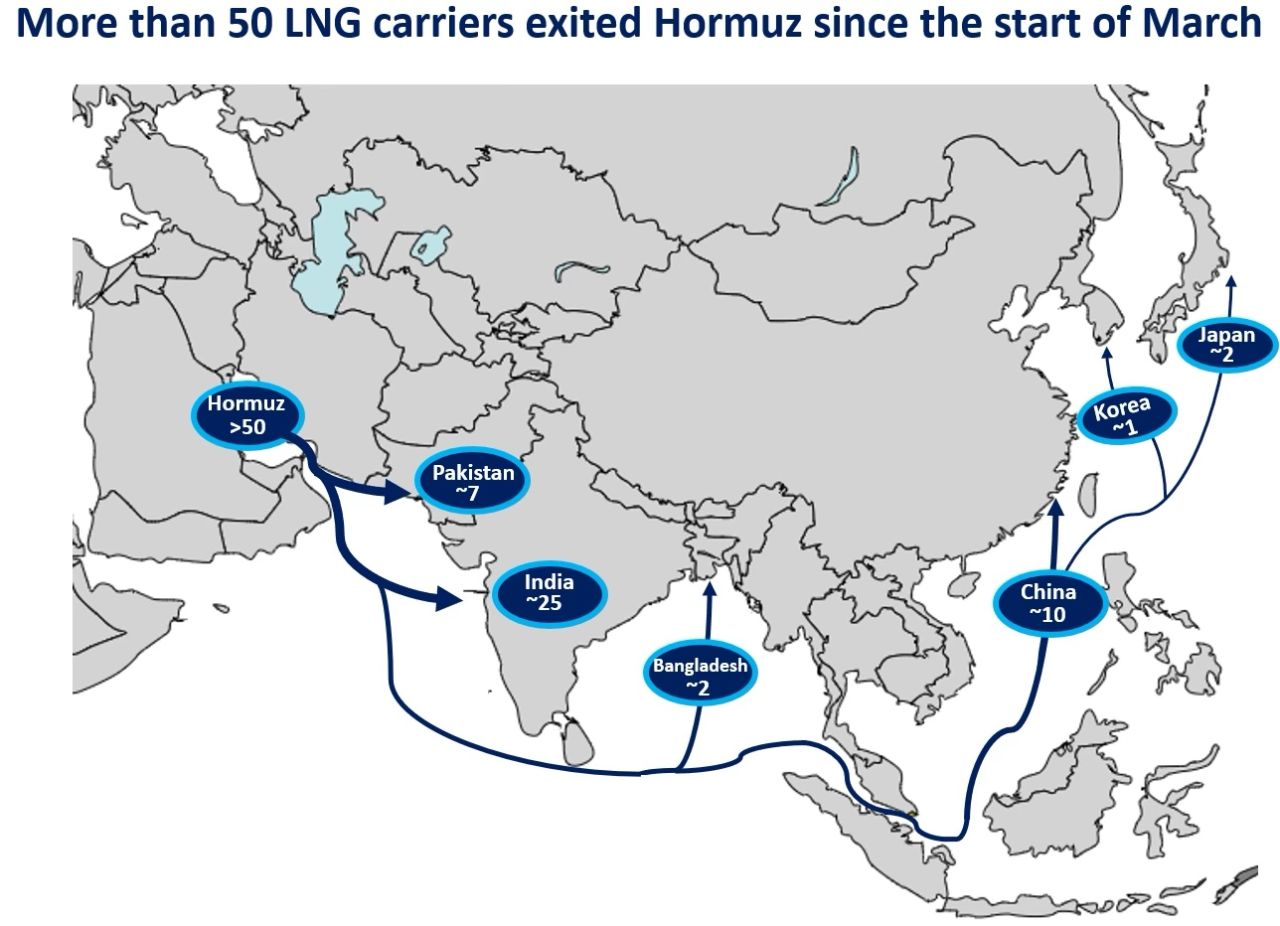
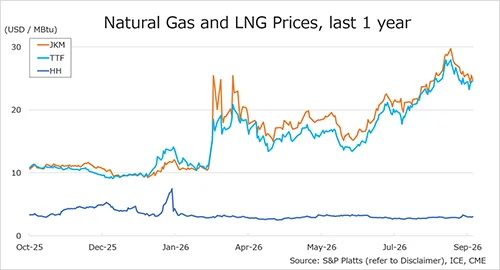
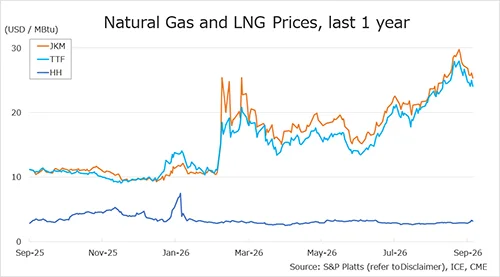
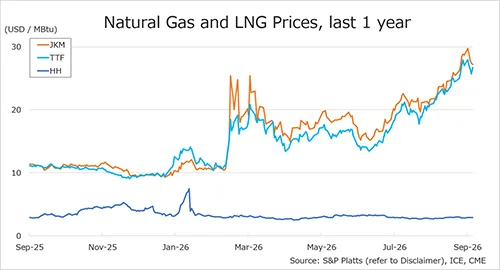
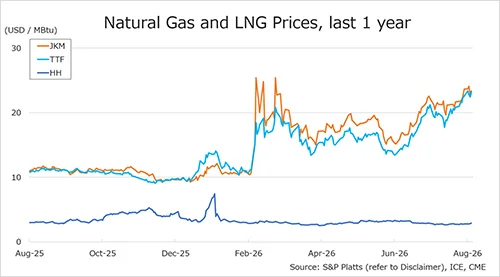
Natural gas prices moved unevenly last week as geopolitical tensions near the Strait of Hormuz lifted JKM and TTF, while Henry Hub declined on softer weather forecasts, stronger inventories and lower LNG feedgas demand.
Asia – JKM
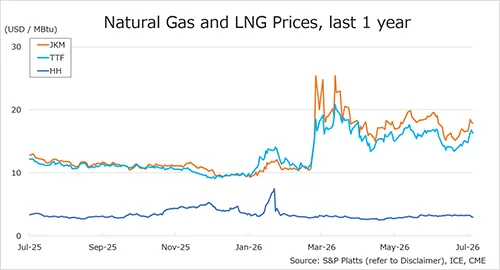
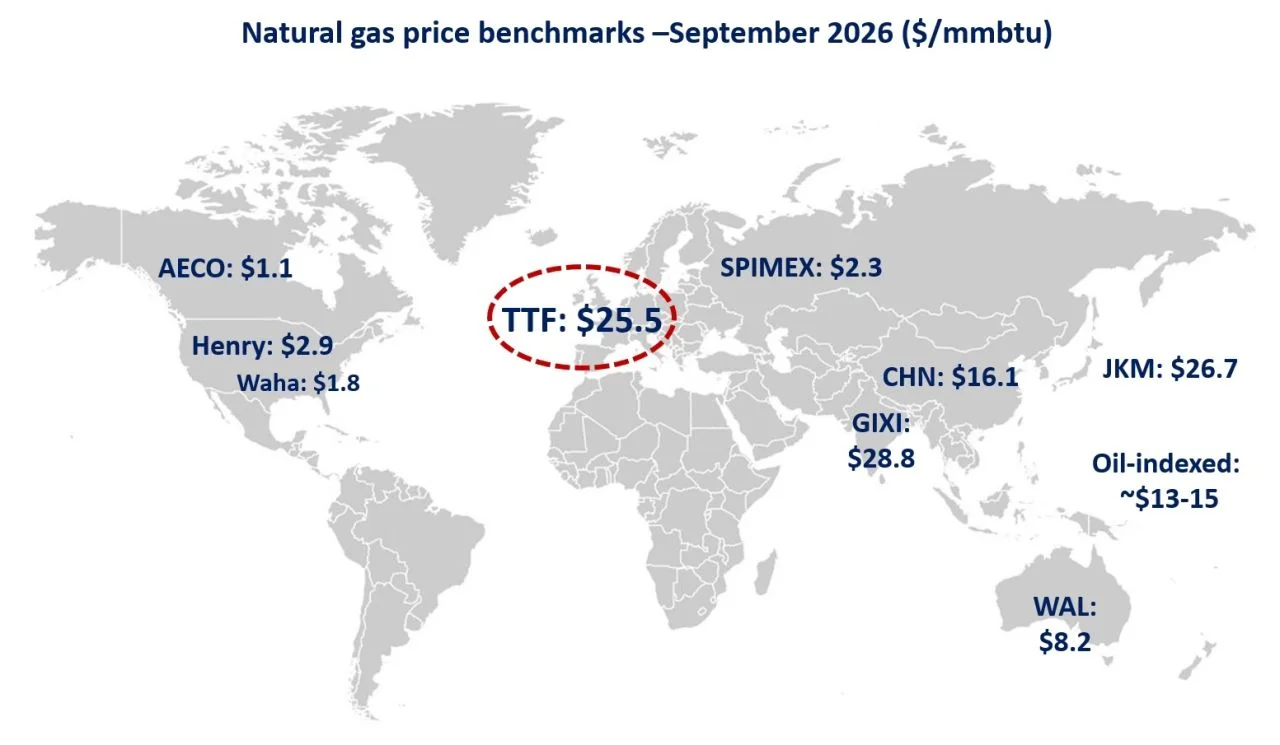
The Northeast Asian assessed spot LNG price JKM for August delivery rose to the high-USD 17s/MBtu on 10 July from the mid-USD 16s/MBtu the previous weekend on 3 July.
At the beginning of the week, JKM remained in the mid-USD 16s/MBtu range amid the resumption of vessel transits through the Strait of Hormuz and subdued spot demand in Northeast Asia.
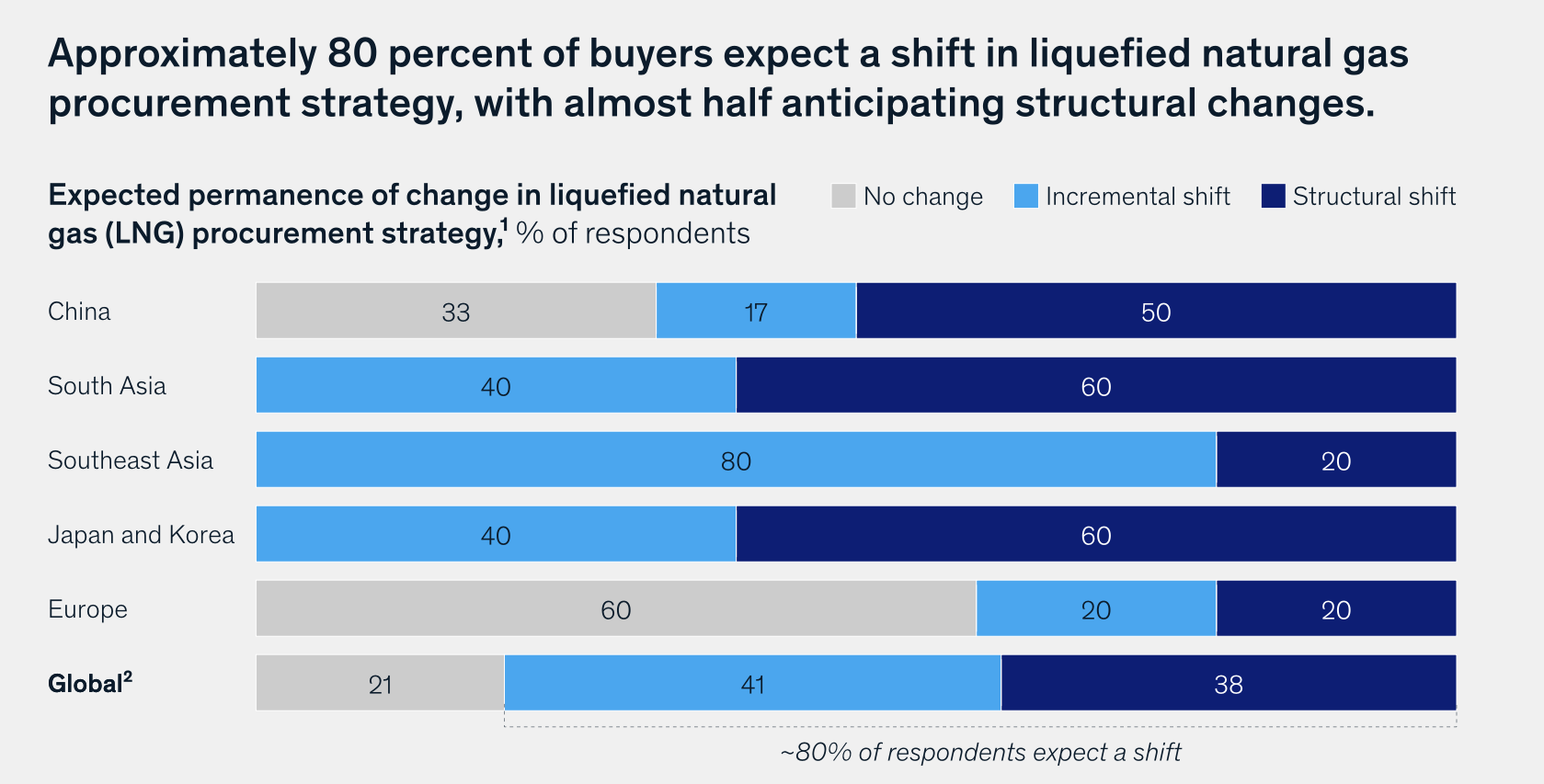
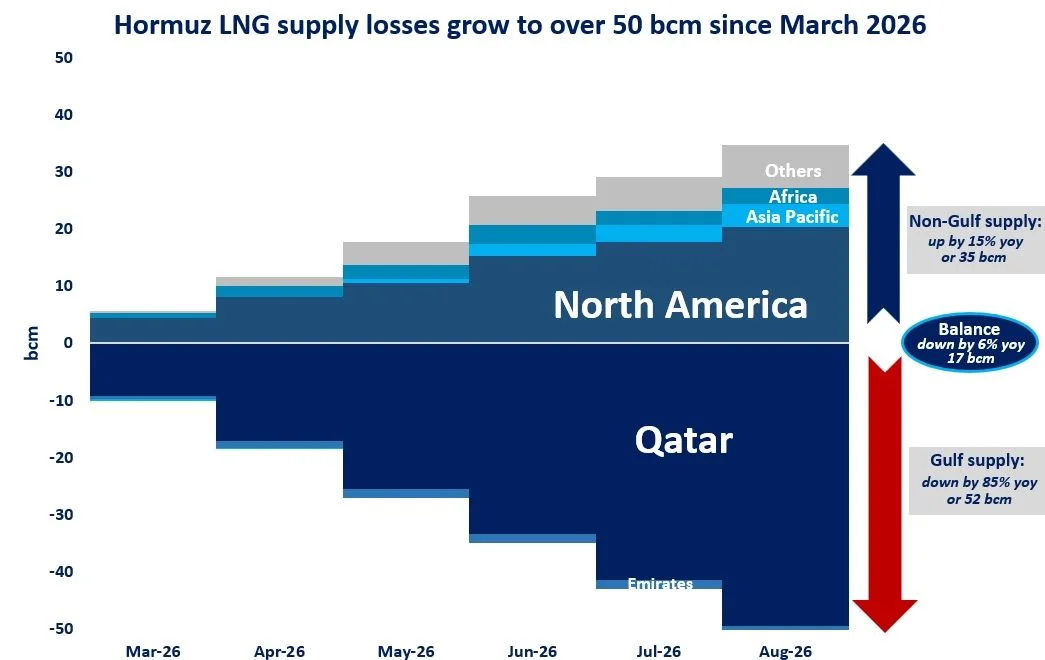
From 7 July onward, however, it rose sharply as concerns over LNG supply intensified following attacks on an LNG carrier near the Strait of Hormuz and escalating military tensions between the United States and Iran, reaching the mid-USD 18s/MBtu range on 8 July.
It subsequently retreated amid ongoing uncertainty surrounding the Middle East situation, as high inventory levels and limited spot purchasing interest in Japan and South Korea weighed on the market, falling back to the high-USD 17s/MBtu range by 10 July.
METI announced on 8 July that Japan’s LNG inventories for power generation as of 5 July stood at 2.33 million tonnes, up 0.33 million tonnes from the previous week.
Europe – TTF
The European gas price TTF for August delivery rose to USD 16.3/MBtu on 10 July from USD 15.1/MBtu the previous weekend on 3 July.
At the beginning of the week, TTF fell to USD 14.8/MBtu as vessel traffic through the Strait of Hormuz normalised and gas injections into European storage continued at a healthy pace.
It subsequently rebounded as concerns over LNG supply resurfaced following attacks on merchant vessels in the Strait of Hormuz and US retaliatory strikes against Iran. It was further supported by higher temperatures across Europe, which boosted demand, and concerns over a slowdown in storage injections, reaching USD 16.4/MBtu on 8 July.
On 9 July, it rose further to USD 16.8/MBtu as unplanned maintenance reduced Norwegian gas supplies. However, it fell back to USD 16.3/MBtu on 10 July as gas supply recovered and LNG inflows increased.
According to AGSI+, EU-wide underground gas storage was 51.5% full on 10 July, up from 49.7% the previous weekend, 17.0 percentage points below the same period last year and 22.9 percentage points below the five-year average.
United States – Henry Hub
The US gas price Henry Hub for August delivery fell to USD 2.9/MBtu on 10 July from USD 3.2/MBtu the previous weekend on 3 July.
During the first half of the week, Henry Hub rose to USD 3.3/MBtu on 7 July, supported by increased cooling demand driven by above-normal temperatures across the southern and eastern United States.
However, it declined from midweek onward due to downward revisions to temperature forecasts, a larger-than-expected increase in natural gas inventories reported by the EIA on 9 July and expectations of lower feedgas demand following the start of maintenance at Freeport LNG.
Robust dry gas production also weighed on the market, pushing Henry Hub down to the low-USD 2.9/MBtu range on 10 July, its lowest level in about six weeks.
The EIA Weekly Natural Gas Storage Report released on 9 July showed US natural gas inventories as of 3 July at 2,983 Bcf, up 61 Bcf from the previous week, down 0.5% from the same period last year and 6.6% above the five-year average.
Source: JOGMEC
Updated: 13 July 2026