LNG bunkering markets have turned highly volatile following the closure of the Strait of Hormuz, with prices surging and regional dynamics diverging sharply between Asia and Europe.
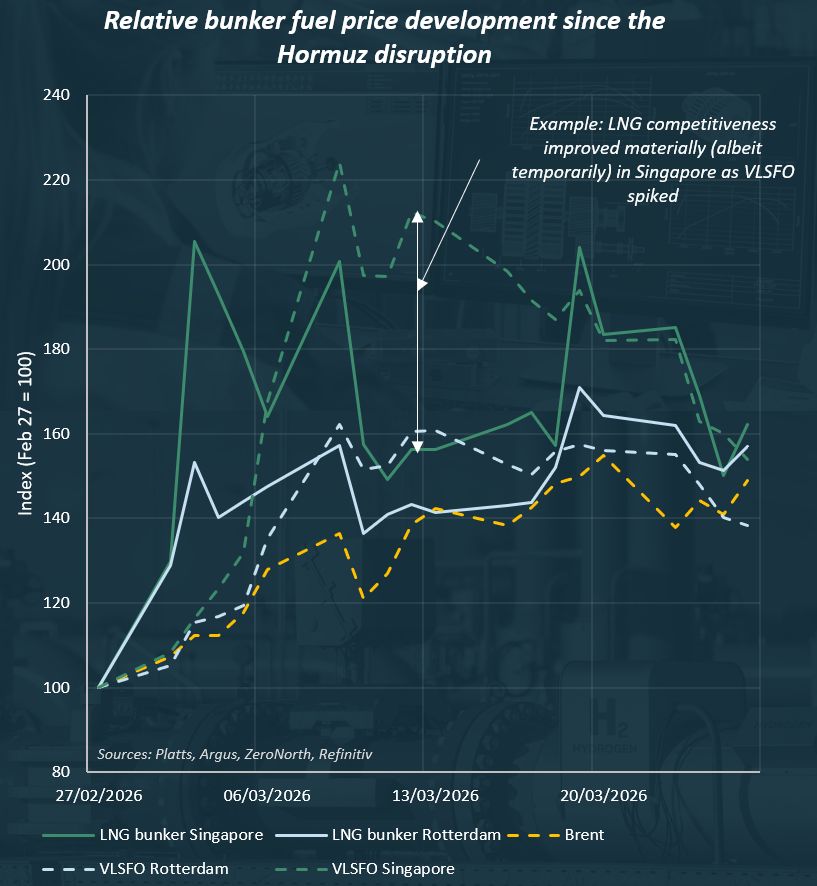
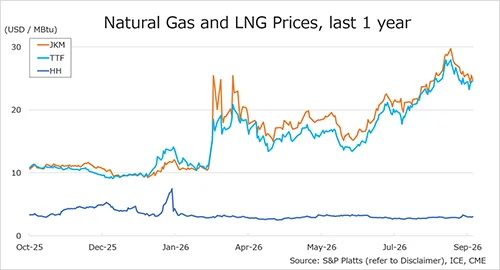
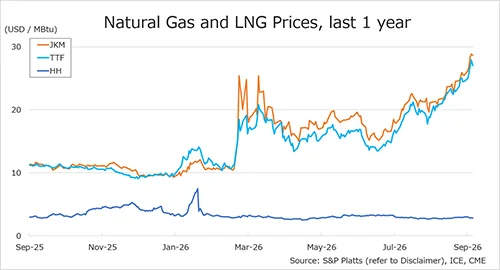
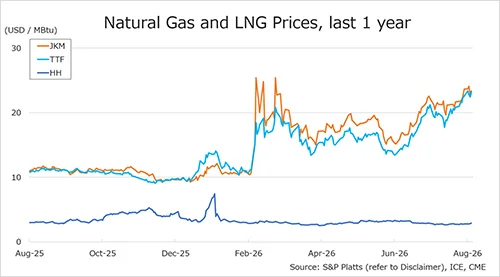
In our latest Fearnleys Quarterly SSLNG report, we examine the impact of the closure of the Straits of Hormuz on the bunker market. As the graph below illustrates, pricing has been highly volatile.
Since the conflict began, Brent crude has risen ~50% to ~$100/bbl (early April) amid volatility. While physical oil (e.g., dated Brent) traded higher, oil markets are partly soothed by Saudi/UAE pipeline reroutes that bypass the strait, floating storage, and a record 400-million-barrel SPR release.
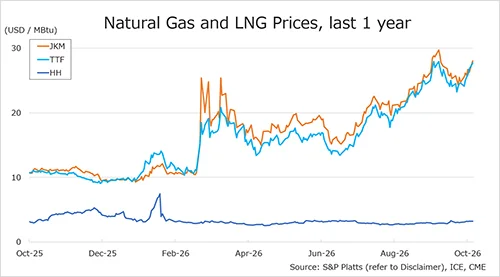
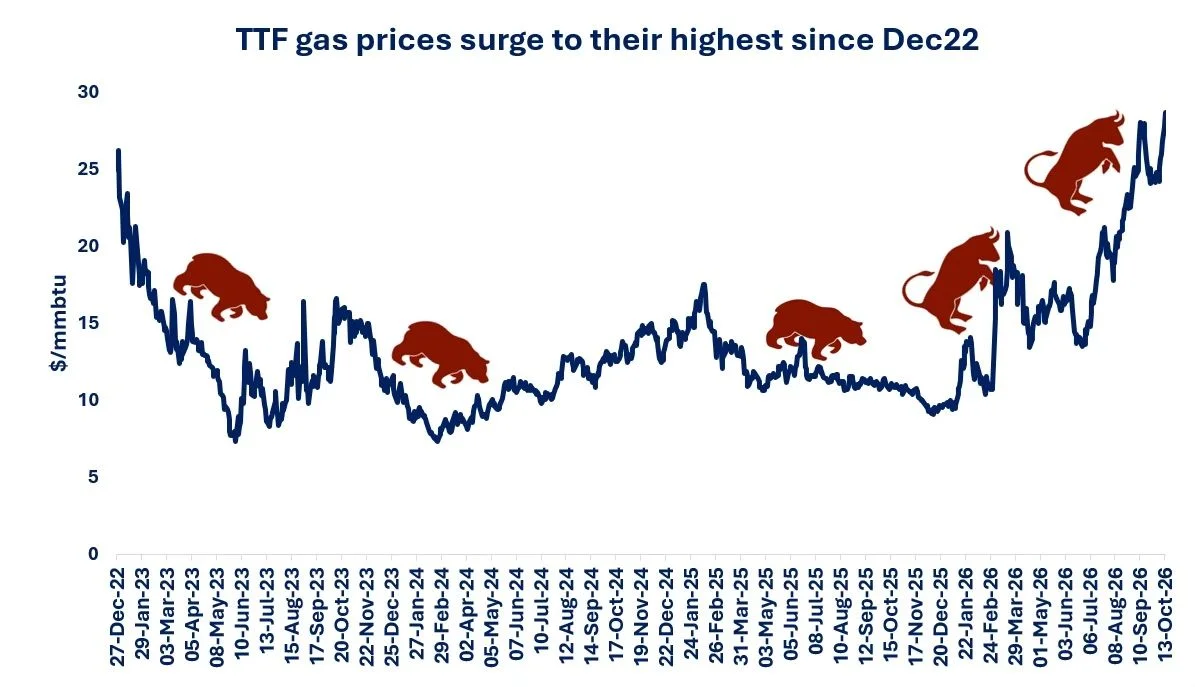
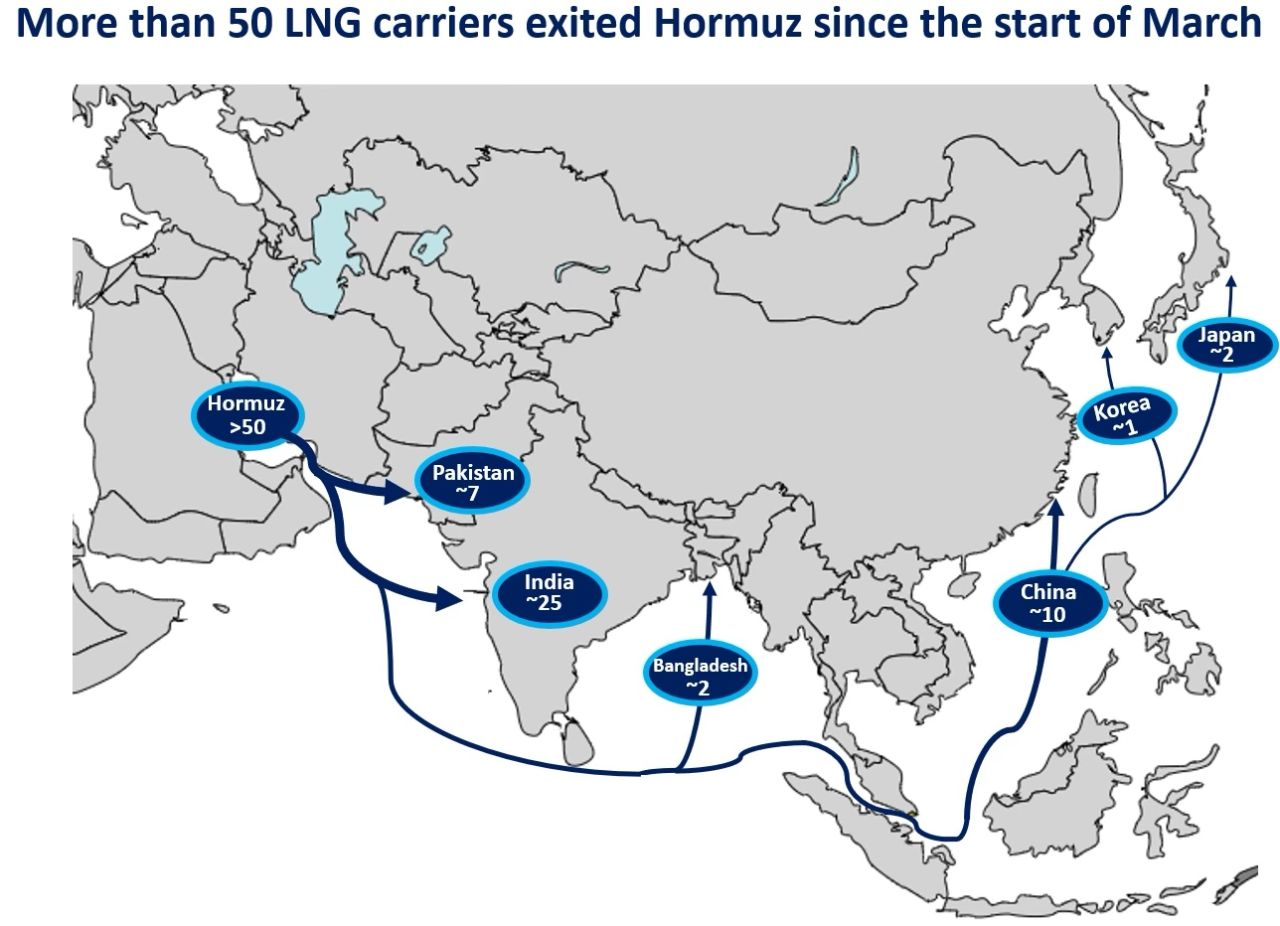
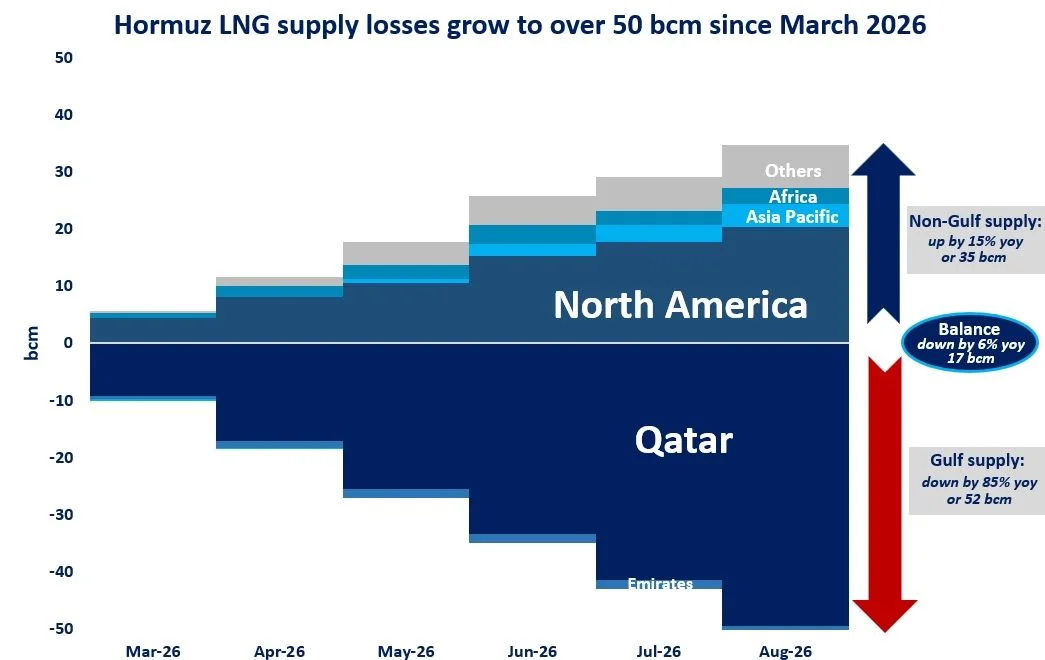
LNG has no equivalent relief valve: there is no bypass capacity for Qatari LNG, and the physical properties of LNG make floating storage challenging. With two of the Ras Laffan trains damaged and offline longer term (repairs estimated ~3–5 years) and ~20% of global seaborne LNG removed from the market, Asian LNG spot prices surged over 140%, far outpacing crude.
Bunker markets have at times (this one included) diverged sharply from underlying indices. In Europe, marine fuel prices have broadly tracked crude, supported by diversified refining and logistics. In Asia, volatility has been higher: Singapore VLSFO spiked more than 120% in early March due to supply constraints, briefly improving LNG’s competitiveness and putting LNG bunkers well into the money.
As conditions normalised, VLSFO prices eased, while LNG bunker prices also proved less volatile than JKM and TTF 𝐝𝐮𝐞 𝐭𝐨 𝐜𝐨𝐧𝐭𝐫𝐚𝐜𝐭 𝐬𝐭𝐫𝐮𝐜𝐭𝐮𝐫𝐞𝐬 𝐚𝐧𝐝 𝐥𝐨𝐜𝐚𝐥 𝐝𝐲𝐧𝐚𝐦𝐢𝐜𝐬. This is a key point as it explains how some regions remain very competitive for LNG, reinforcing the value of flexible LNG bunker supply for buyers (see page 9 of our report).
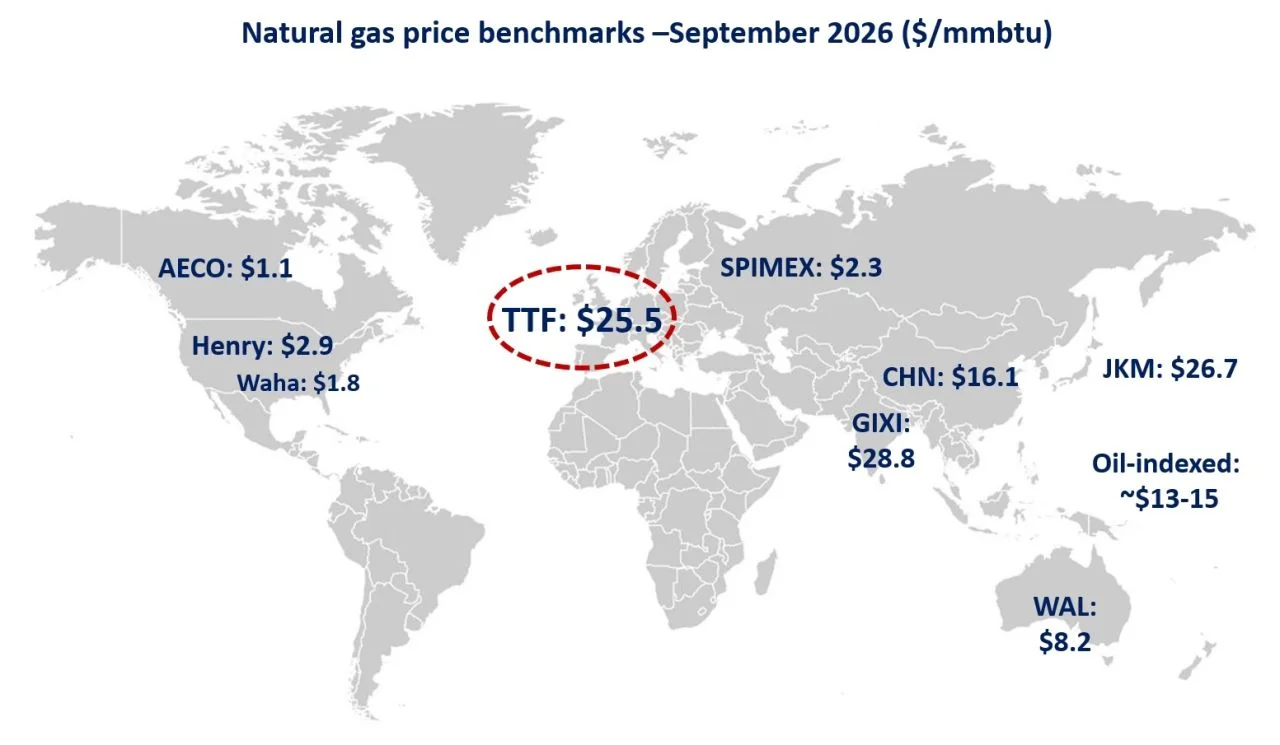
Average Q2 prices for LNG are approximately $19.30/MMBtu in Asia (~$785/tVLSFOe) and $18.25–$19.00/MMBtu in Europe (~$740–$770/tVLSFOe). US prices remain materially lower, averaging $14.47/MMBtu ($588/tVLSFOe). Anecdotally, Vancouver prices remain even more attractive, and whilst it’s too early to produce volume-specific analysis for this quarter, Canada’s pricing stability is best evidenced through their 115% increase in LNG Bunker sales when comparing Q4 2025 with Q1 2026.
Looking ahead, oil markets are expected to adjust faster, while LNG faces more prolonged tightness. Although around 37 MTPA of new liquefaction capacity is due online in 2026, whether this restores LNG bunker economics will depend on the duration of the conflict and the pace of project ramp-ups.
It is worth noting that, whilst the majority of traded LNG bunkers are priced/indexed against TTF and JKM, there remains some LNG being sold at prices indexed to oil and North American gas indices and these prices are expected to remain highly competitive in today’s market environment.
Source: Fearnley LNG