LNG carriers are caught between a short-term freight spike and a medium-term oversupply risk tied to disrupted Qatari export volumes.
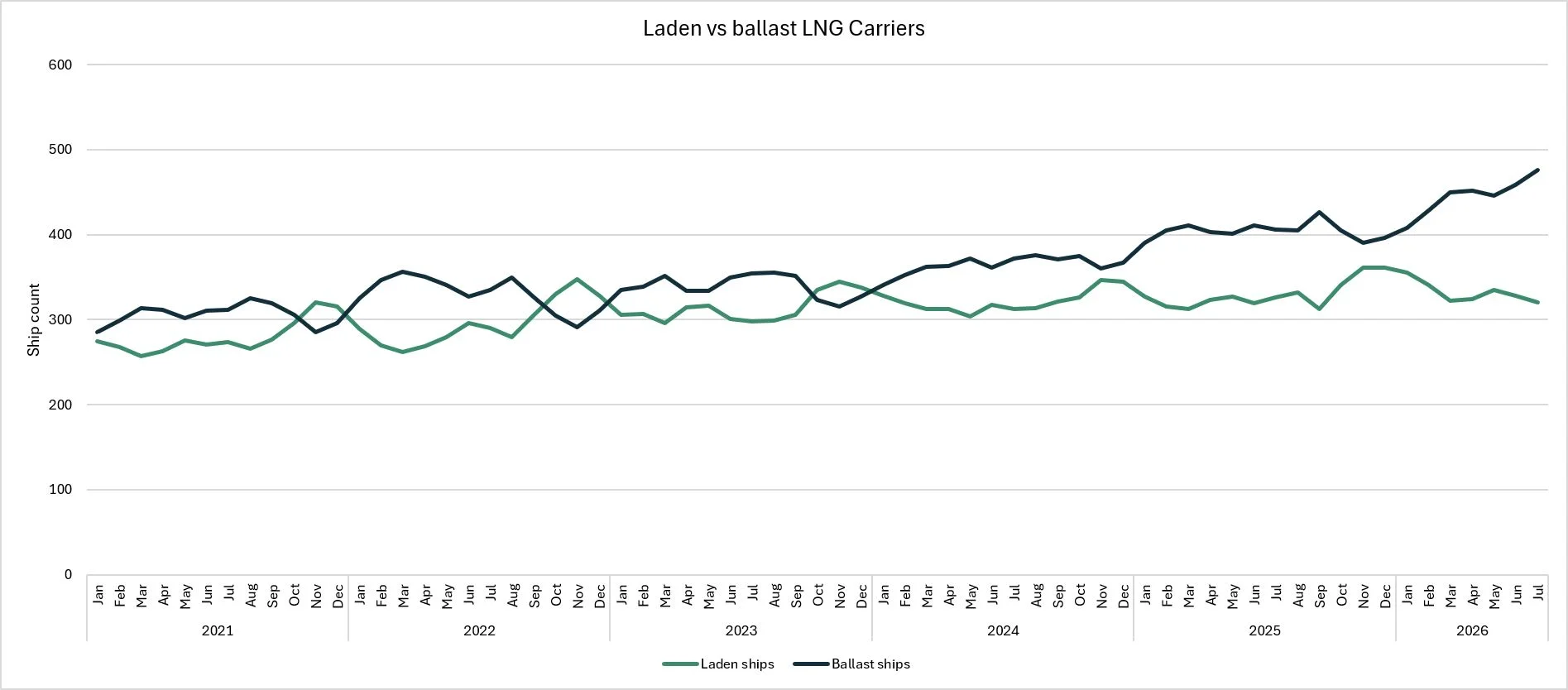
The situation in the Middle East raises a challenging question: does the disruption mean more ships are needed, or fewer?
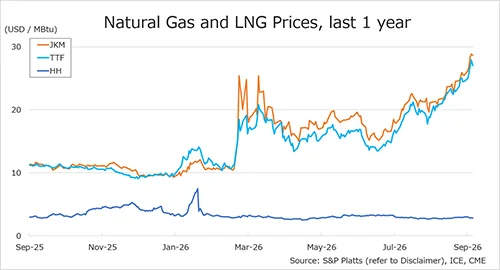
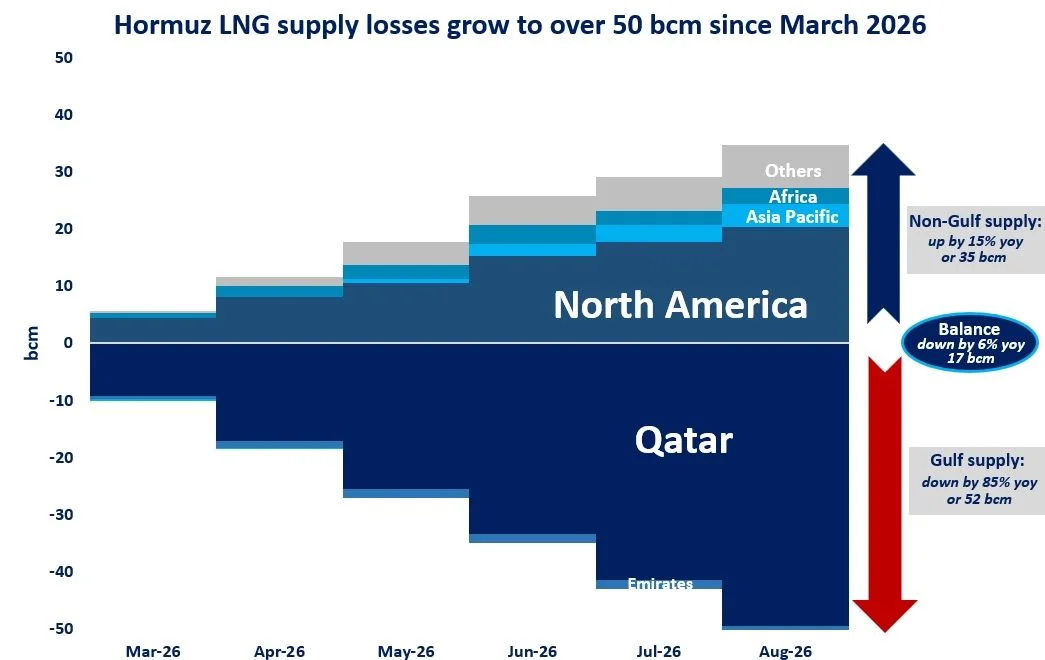
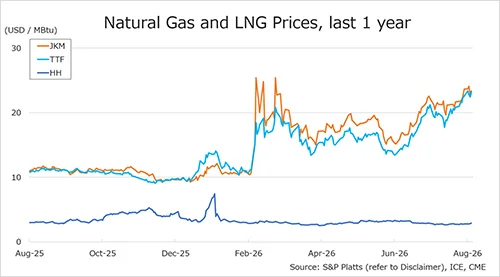
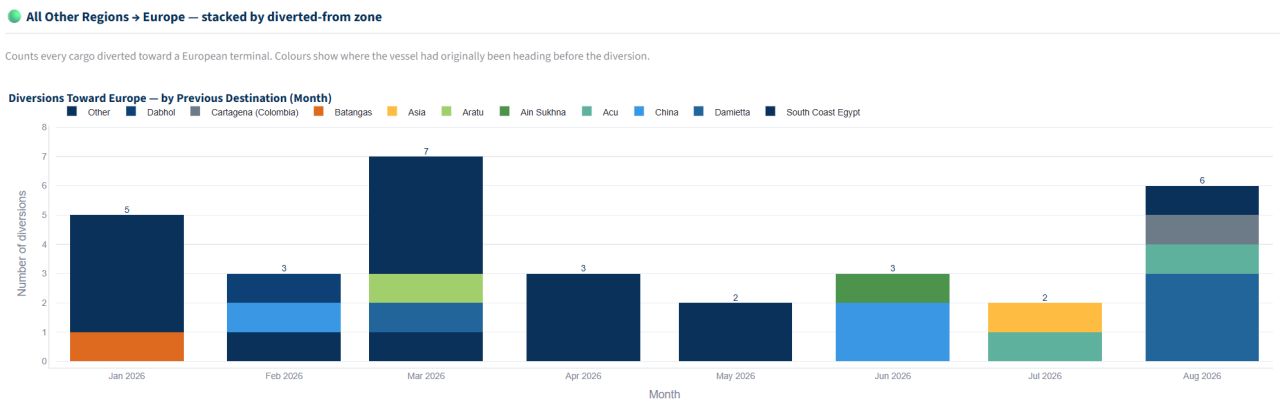
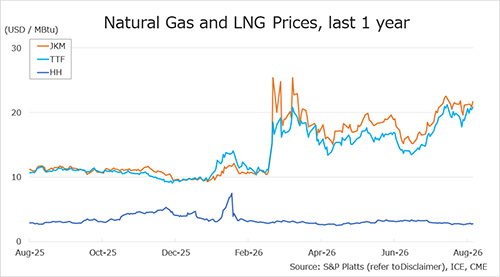
Since late-February strikes on Iran, the Strait of Hormuz, handling ~22% of global LNG exports, has seen traffic near zero, with QatarEnergy halting production and Brent moving above $100/bbl.
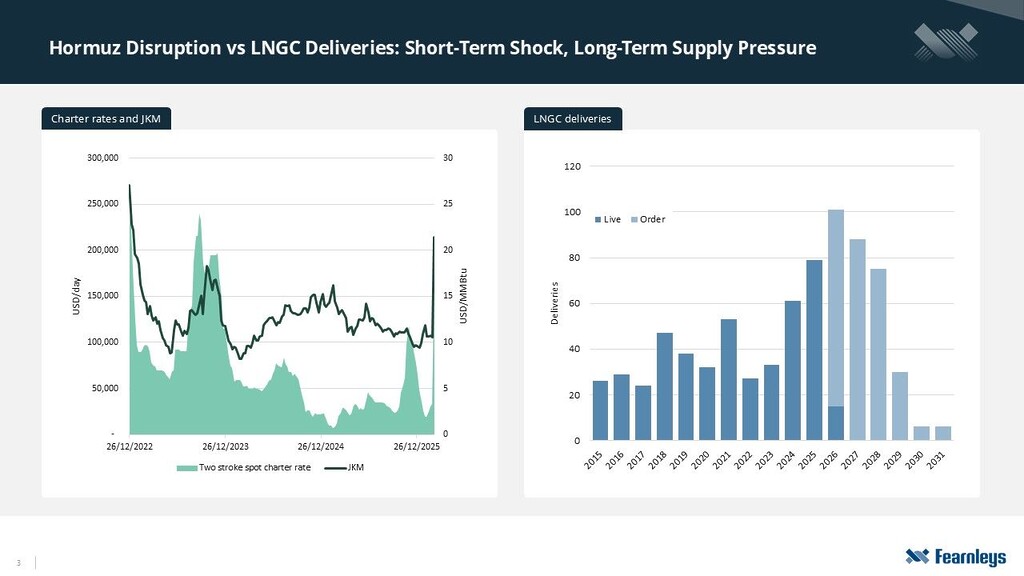
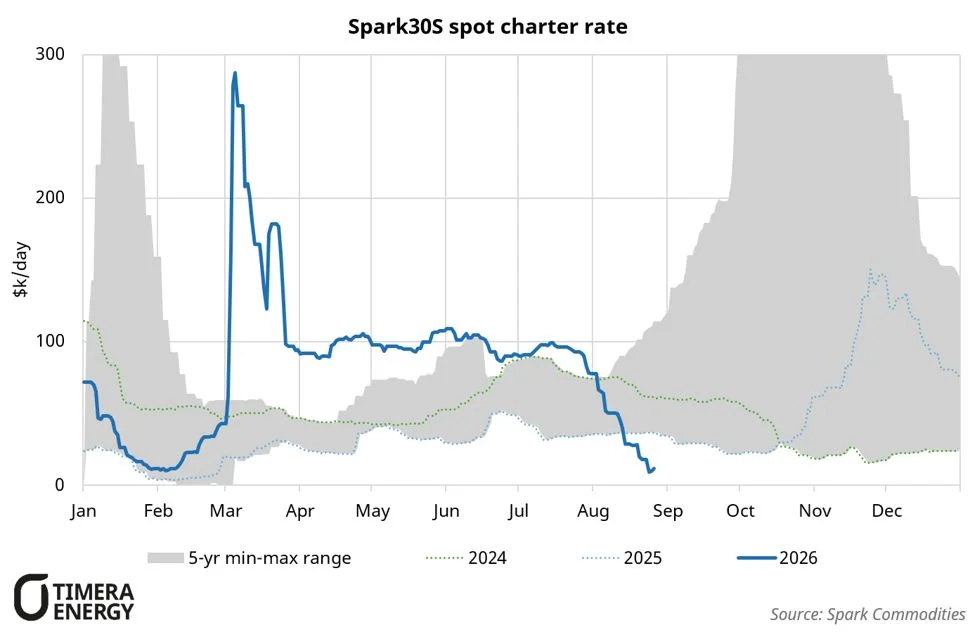
The freight response was immediate. As noted in our 4 March LNG report, Fearnley LNG estimated spot rates surged from ~$42k to ~$300k/day week-on-week for 174k cbm vessels (USG–JKTC).
This is a disruption-driven signal, not a structural one. The deeper question: what happens to the ships built for Qatar?
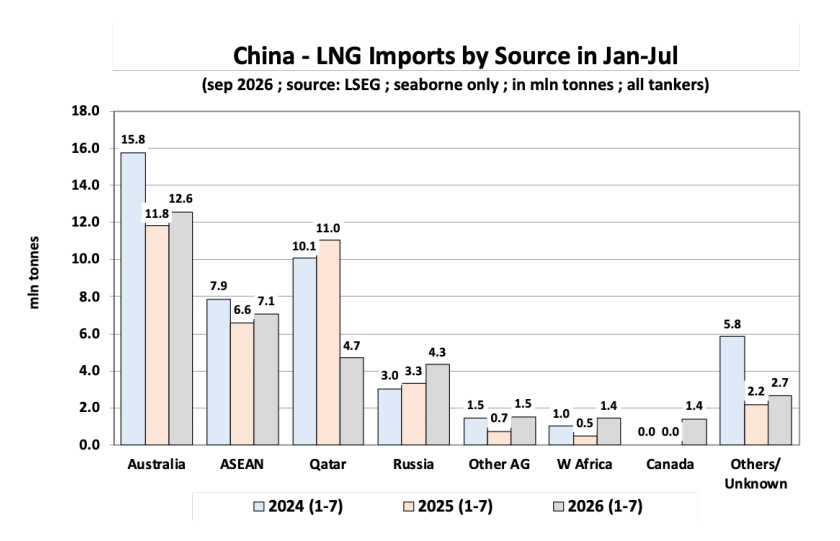
QatarEnergy has been a key driver of newbuild orders tied to its North Field expansion (66 MTPA). A substantial share of the vessel orderbook is linked to this cargo base. If volumes are absent, these vessels struggle to find equivalent employment, with most projects already running near capacity.
The medium-term picture is a two-speed market:
• Spot rates elevated and volatile due to rerouting and war-risk
• Period and forward markets softening as the scale of displaced Qatar cargo becomes apparent
• New deliveries continuing irrespective of the cargo shortfall
• Qatar-linked tonnage competing in an already well supplied spot market
This echoes post-COVID container shipping: an initial spike masking a structural imbalance.
The two countries building the world’s LNG fleet face their own irony here.
South Korea sources ~70% of its crude via Hormuz. Higher energy costs feed into shipyard operations, even as Seoul activates a 100 trillion won stabilization programme, with cost inflation non-trivial for yards running full orderbooks.
China faces similar exposure, with ~33% of its oil flowing through Hormuz, alongside tariff pressure and a softer 2026 outlook.
The long-term case for LNG remains intact. But the market must distinguish between the initial short-term rate signals and the medium-term reality: a large orderbook, constrained supply, and a Qatari volume base that cannot be quickly replaced. All eyes are now on the timing and execution of the North Field expansion, as even modest delays will have implications on the medium-term balance.
Energy security is measured in cubic meters, knots, and time. Right now, all three point to a more complex story than spot rates suggest.
Source: Fearnley LNG